
Driveways, patios, RV pads, steps, and decorative flatwork — poured right, reinforced properly, and built to handle thirty Northern Utah winters without complaint.
A well-poured concrete driveway in Northern Utah does something important: it disappears into the background. It's flat, it drains properly, it doesn't crack in ways that become trip hazards, and it looks as good in year twenty as it did in year one. That's what good concrete does — it stops drawing attention to itself and lets your home be the focus. You don't notice it. That's the point.
Bad concrete announces itself constantly. Cracks that open wide enough to catch a heel. Sections that heave in winter and settle in spring, creating lips that collect ice. A surface that spalls after a few freeze-thaw cycles because the mix was wrong or the curing was rushed. Standing water that should drain but doesn't because the grade wasn't checked carefully enough. These are not hypothetical failures — they're the reality of concrete work done without adequate thickness, reinforcement, base preparation, or attention to drainage. In Northern Utah's climate, shortcuts in concrete show up fast.
EC Scaping has been pouring concrete in Weber and Davis counties for over a decade. We pour with appropriate mix designs for our climate, reinforce every slab (rebar or fiber depending on application), cut control joints in a layout designed to manage cracking predictably, and grade every pour carefully for drainage. The result is concrete that performs and looks the way you expected when you signed the contract — for a very long time.
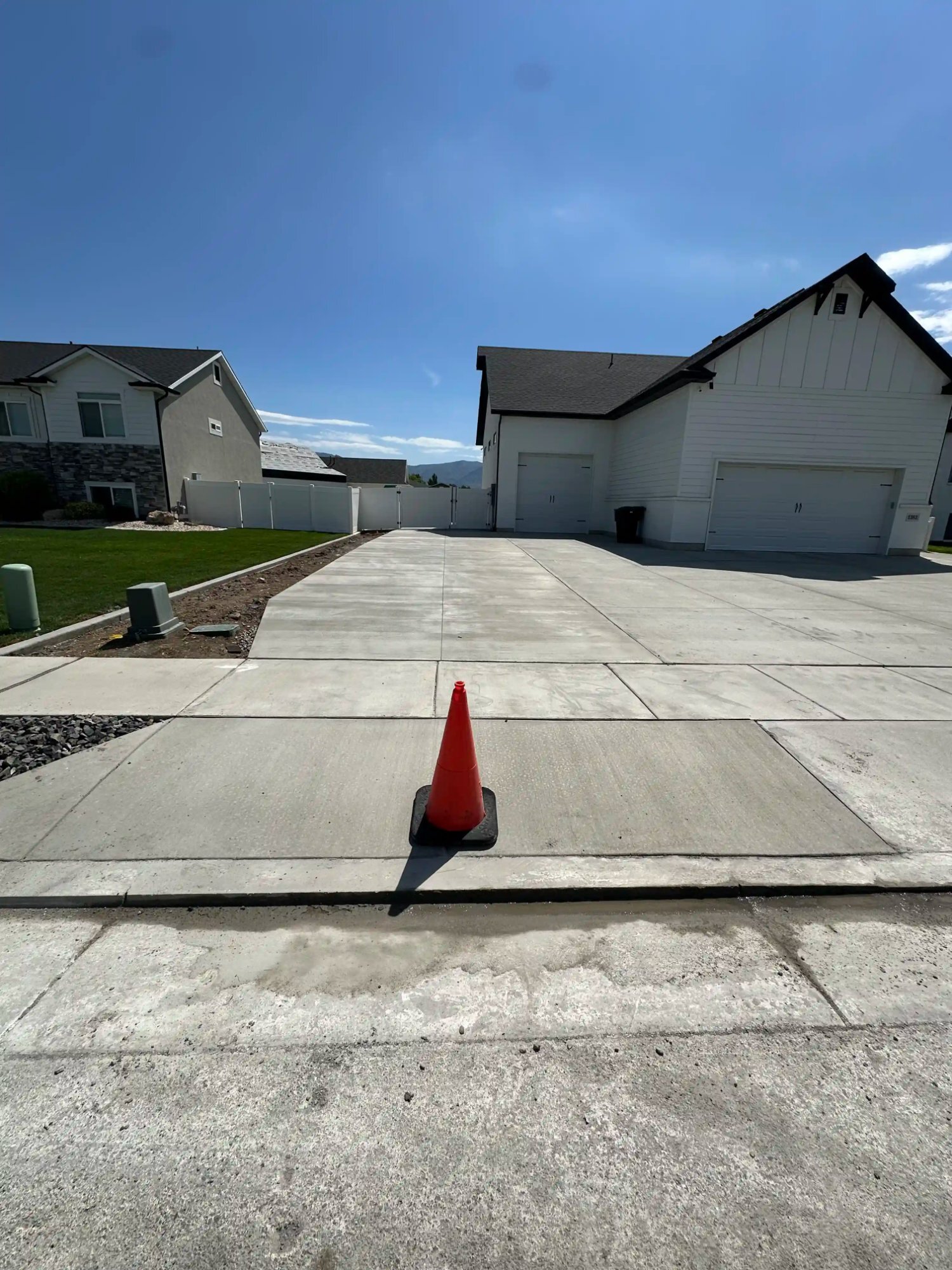
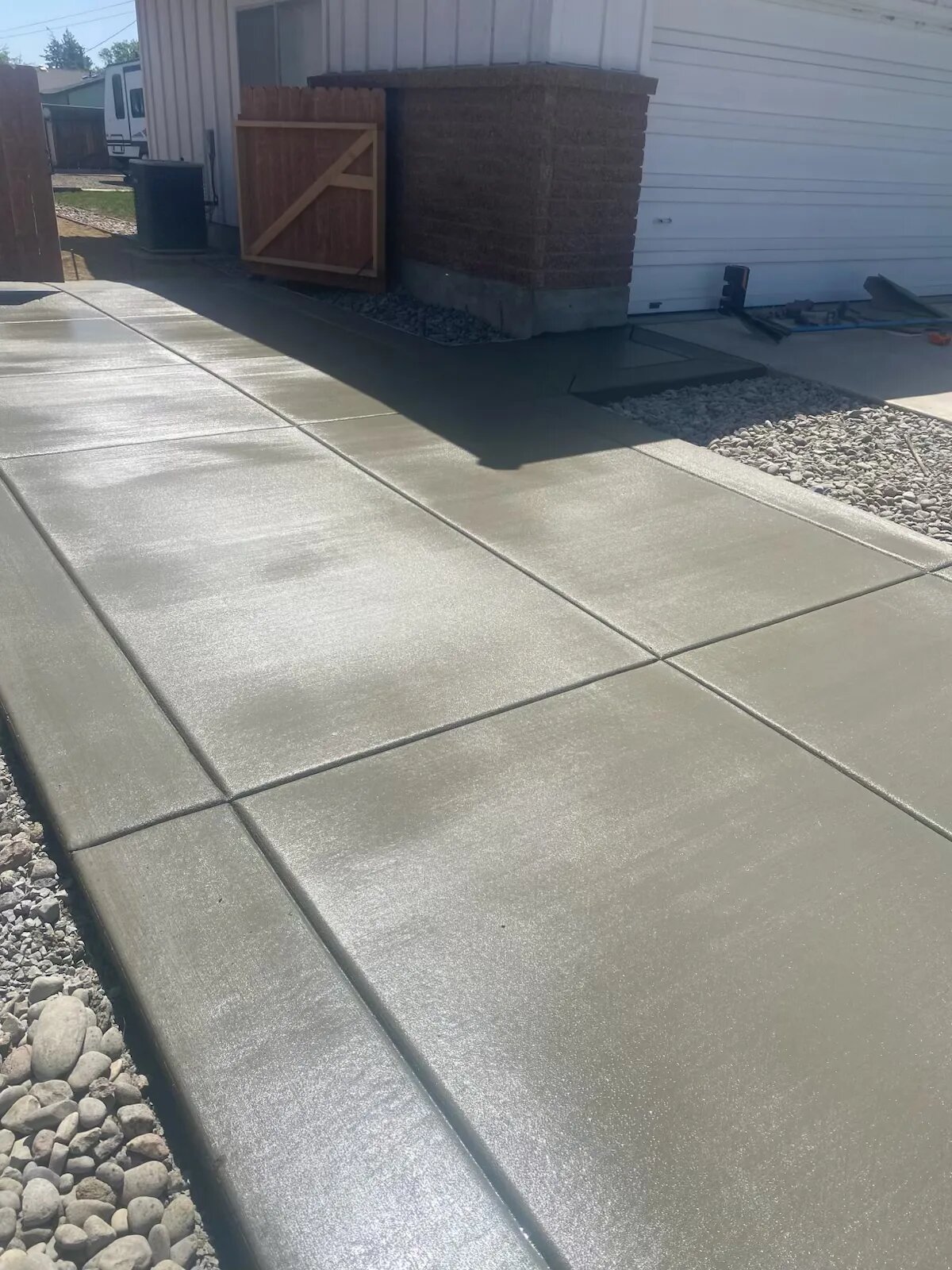
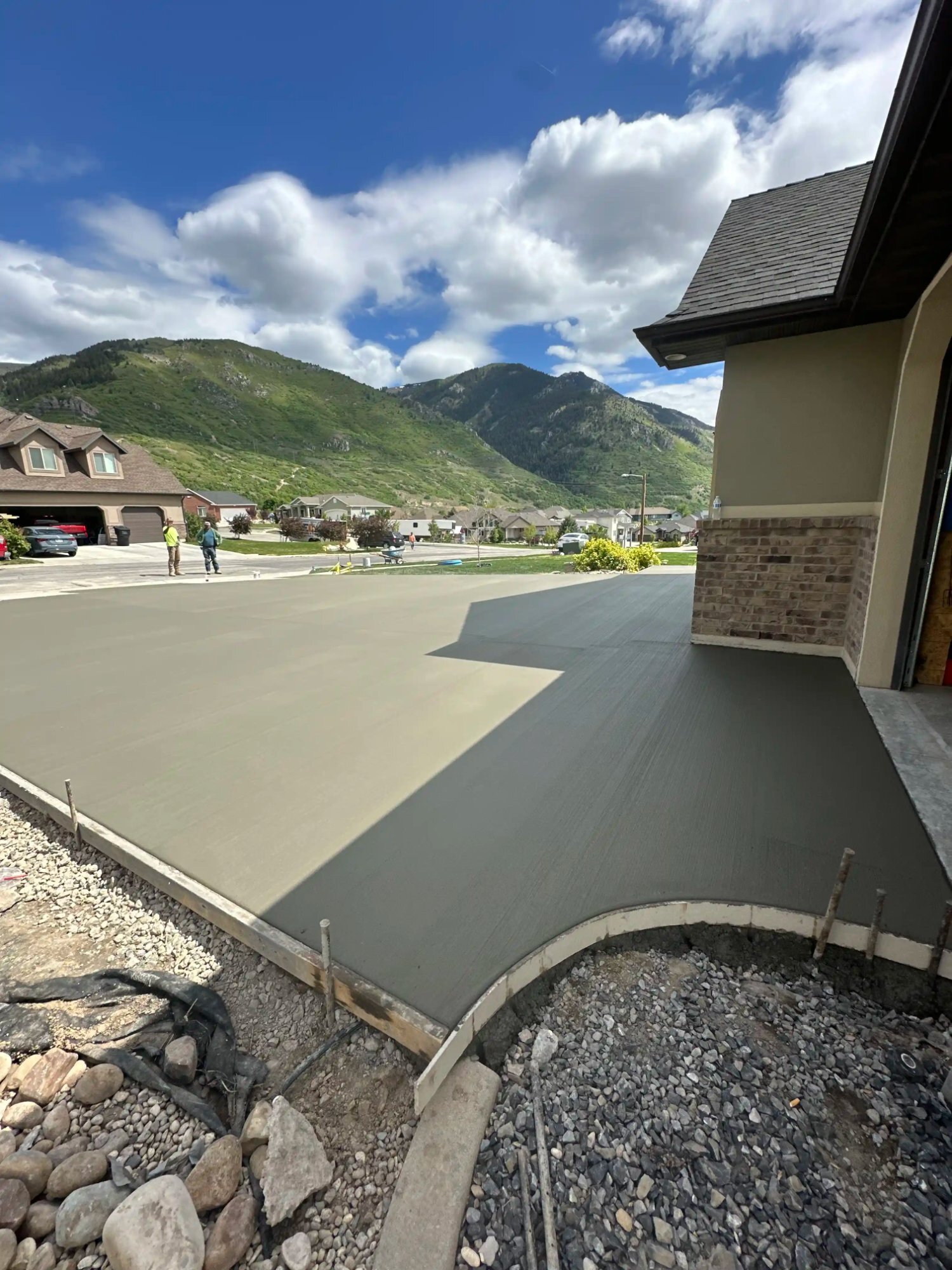
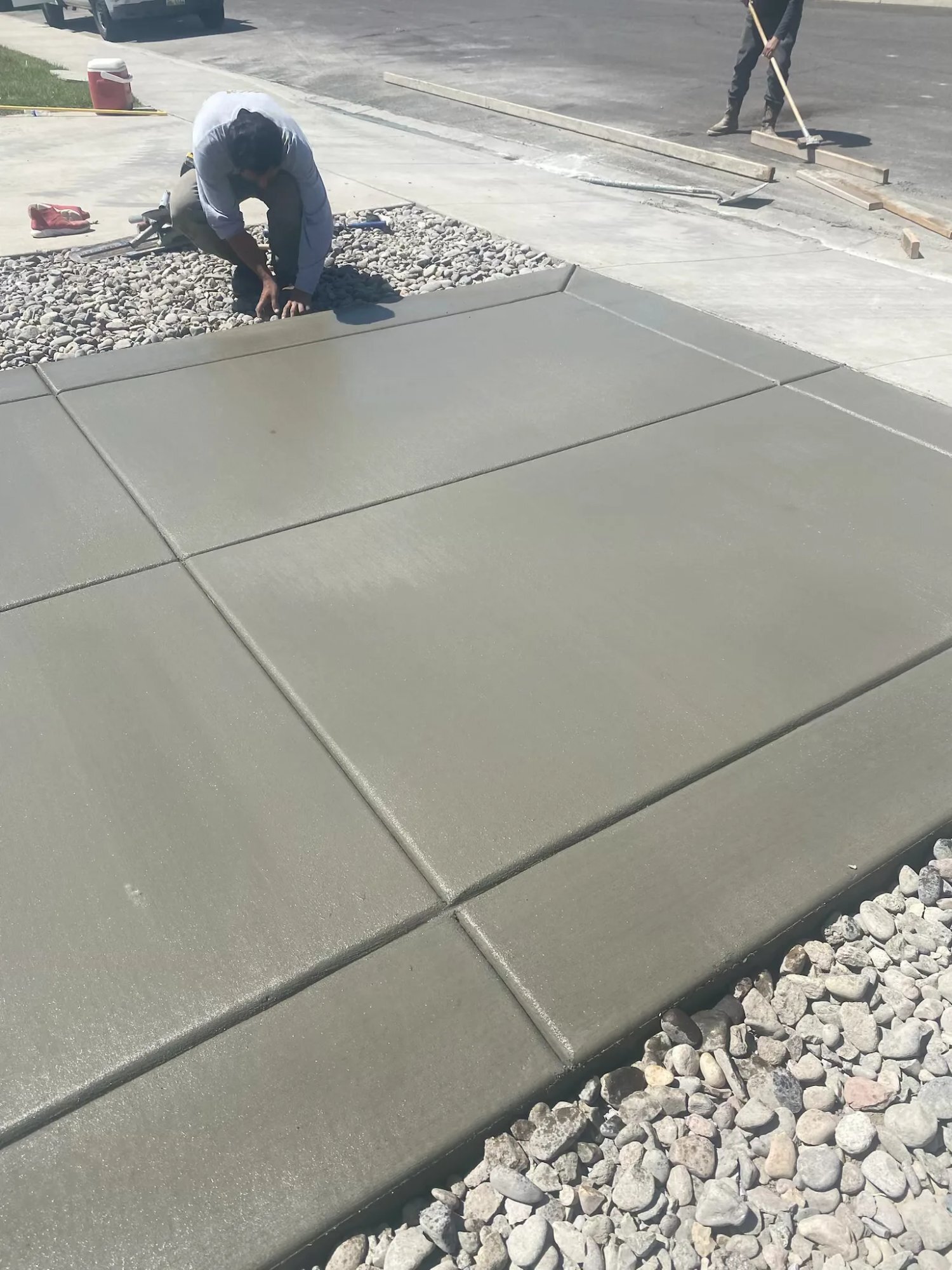
Your driveway is the first surface every visitor crosses and the last thing you see when you pull in each evening. It does real work — vehicle loads, freeze-thaw cycles, de-icing salt, oil drips, and decades of use. We pour residential driveways at 4–6 inches thick depending on load requirements, with fiber reinforcement or rebar in a grid pattern, proper base compaction, and control joints laid out to channel cracking into predictable lines. The result is a driveway that handles Northern Utah's demands without apology.
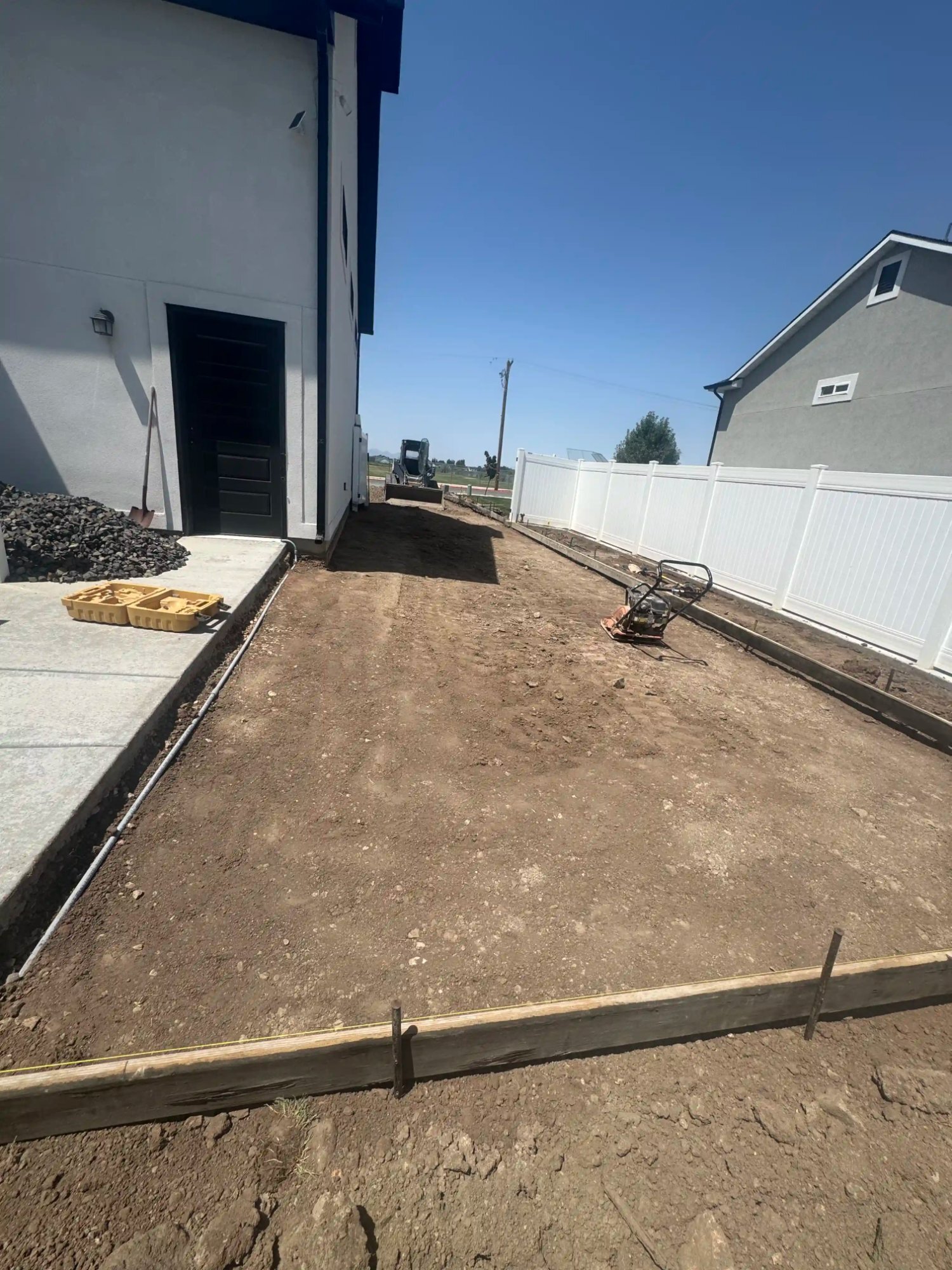
Driveway replacement starts with demolition and removal of the failing concrete — we don't patch over problems. We haul the demolished material off-site, assess and compact the sub-base, and prepare a clean surface for the new pour. If your existing drainage is directing water toward your foundation or garage, we correct that grade before we pour. Doing it right once costs less than doing it twice.
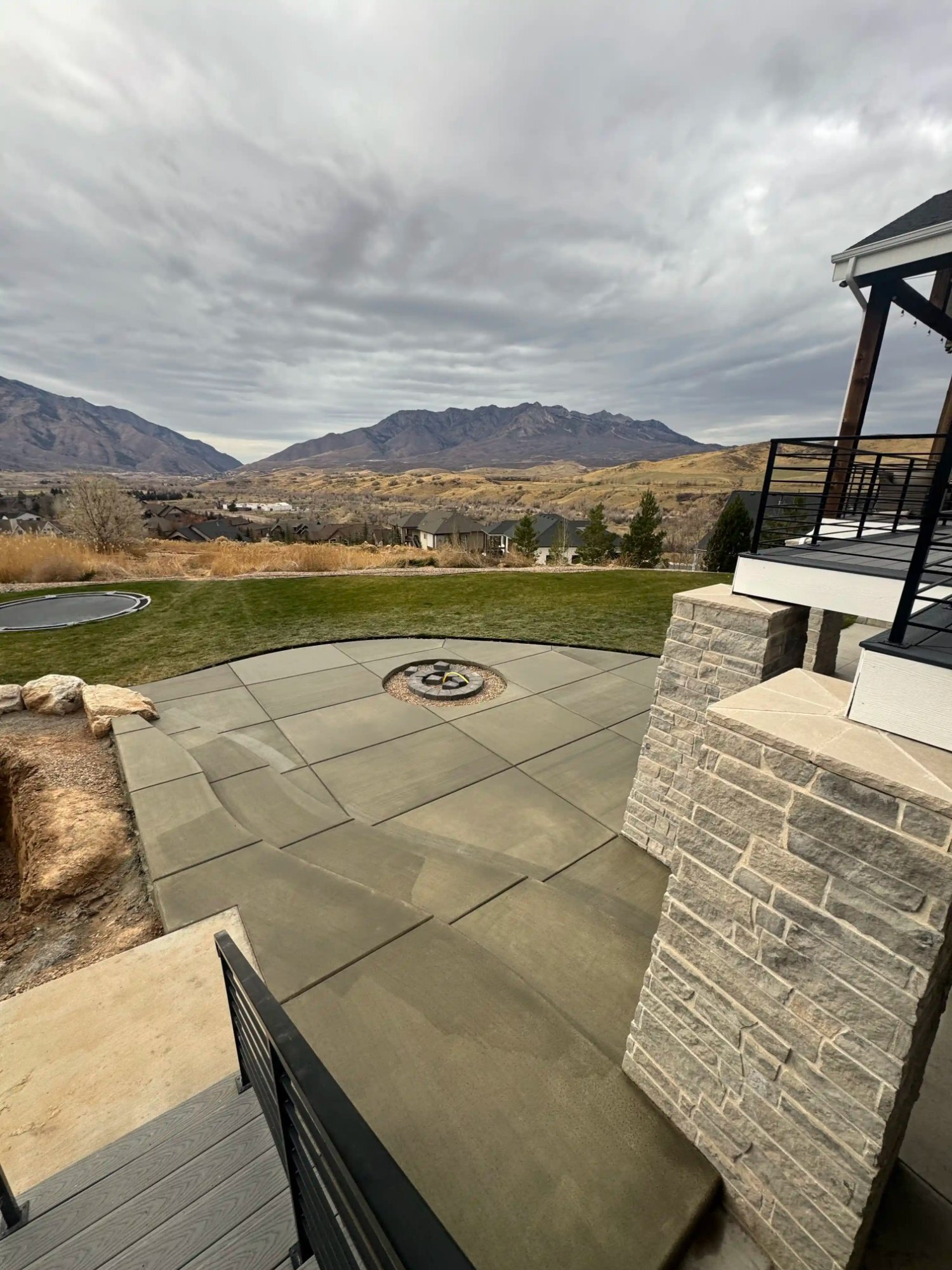
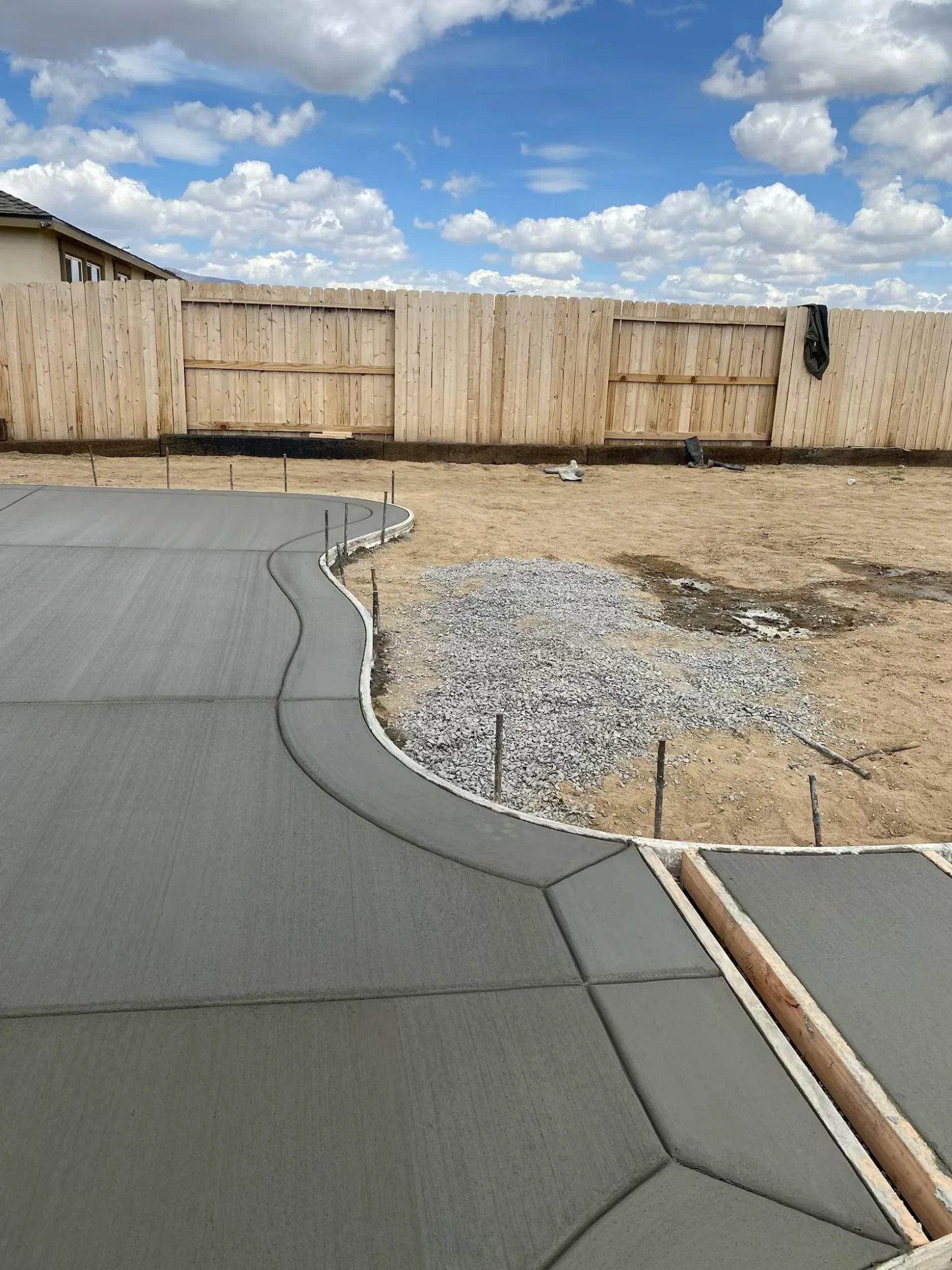
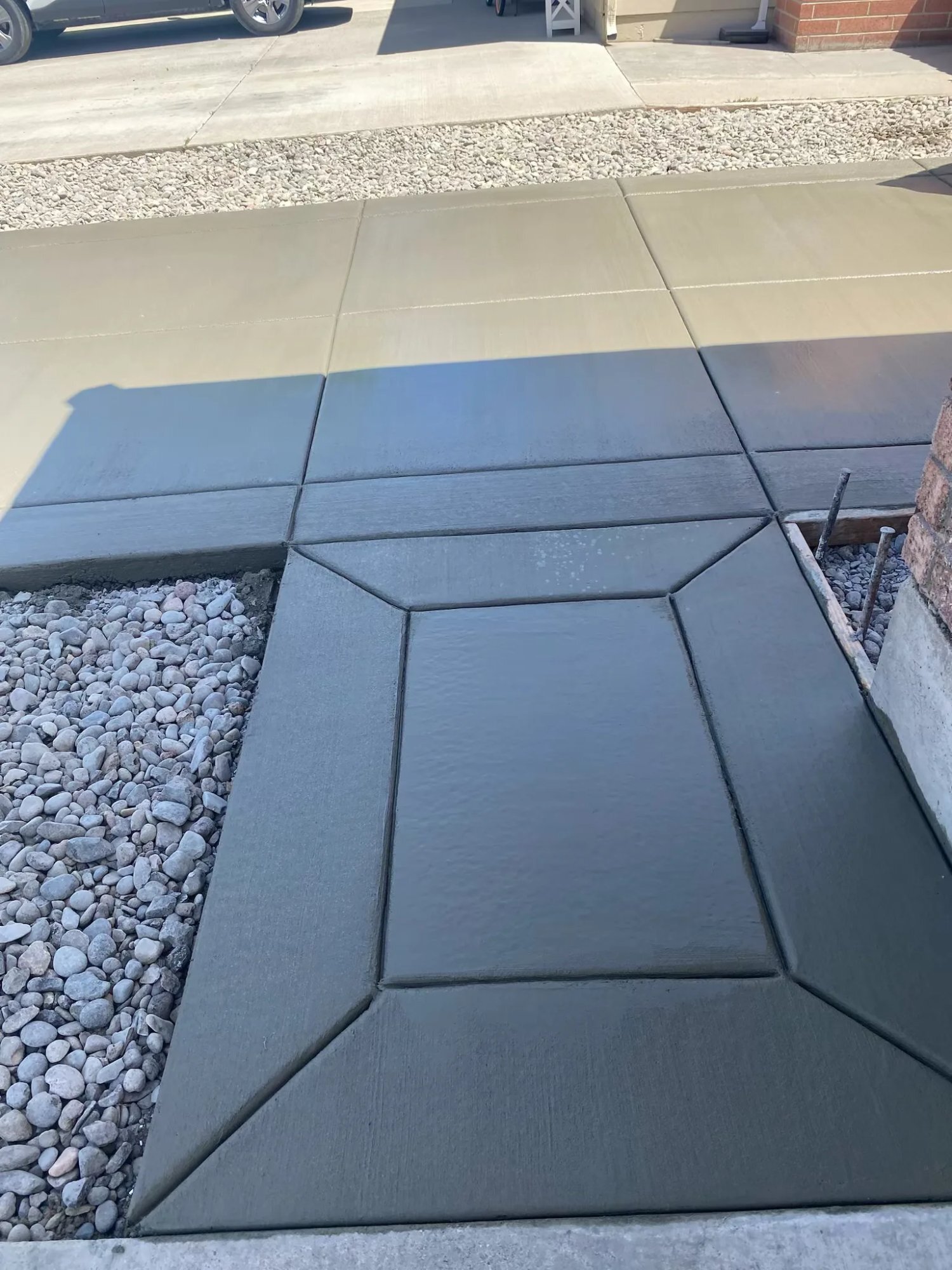
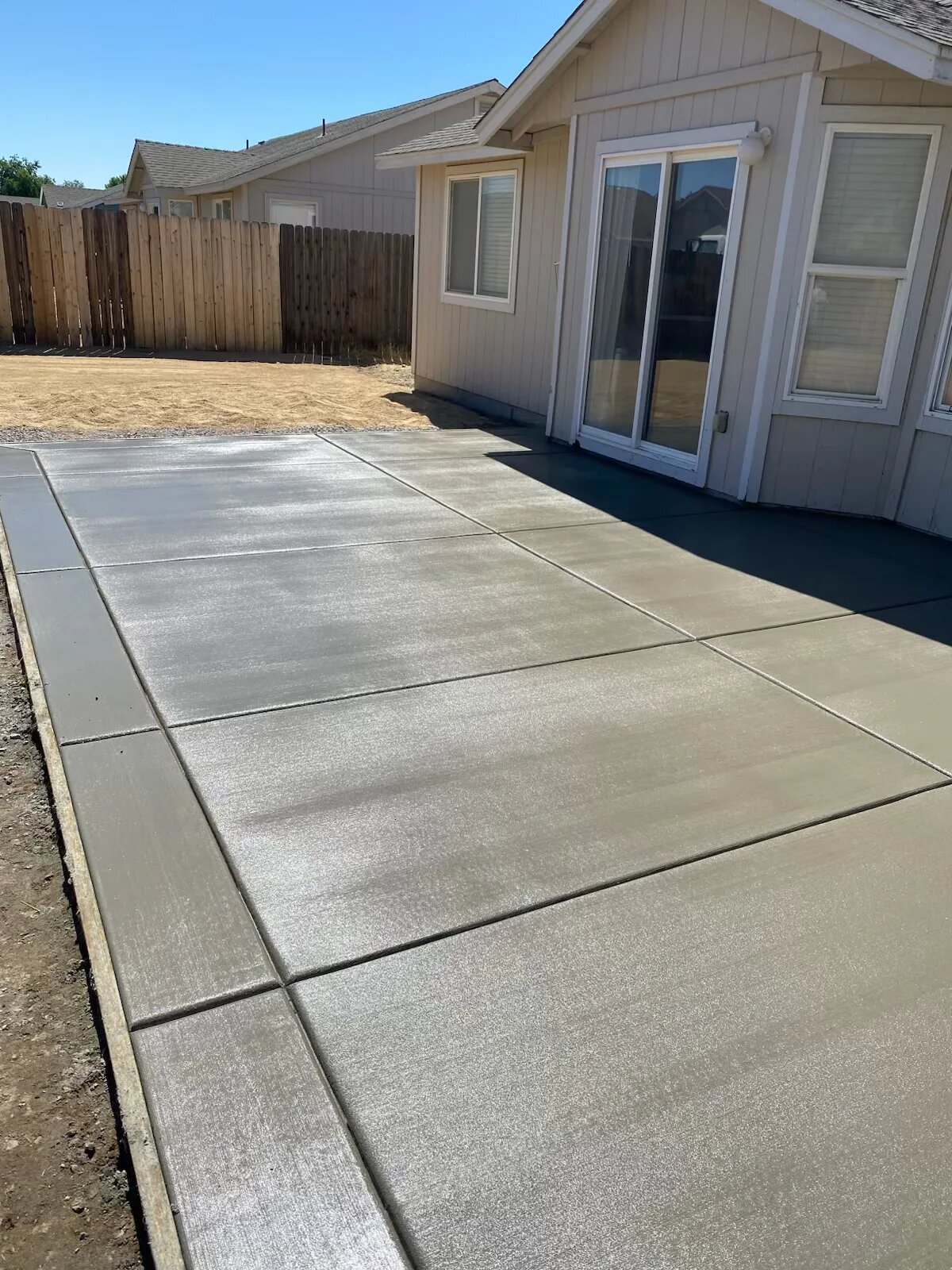
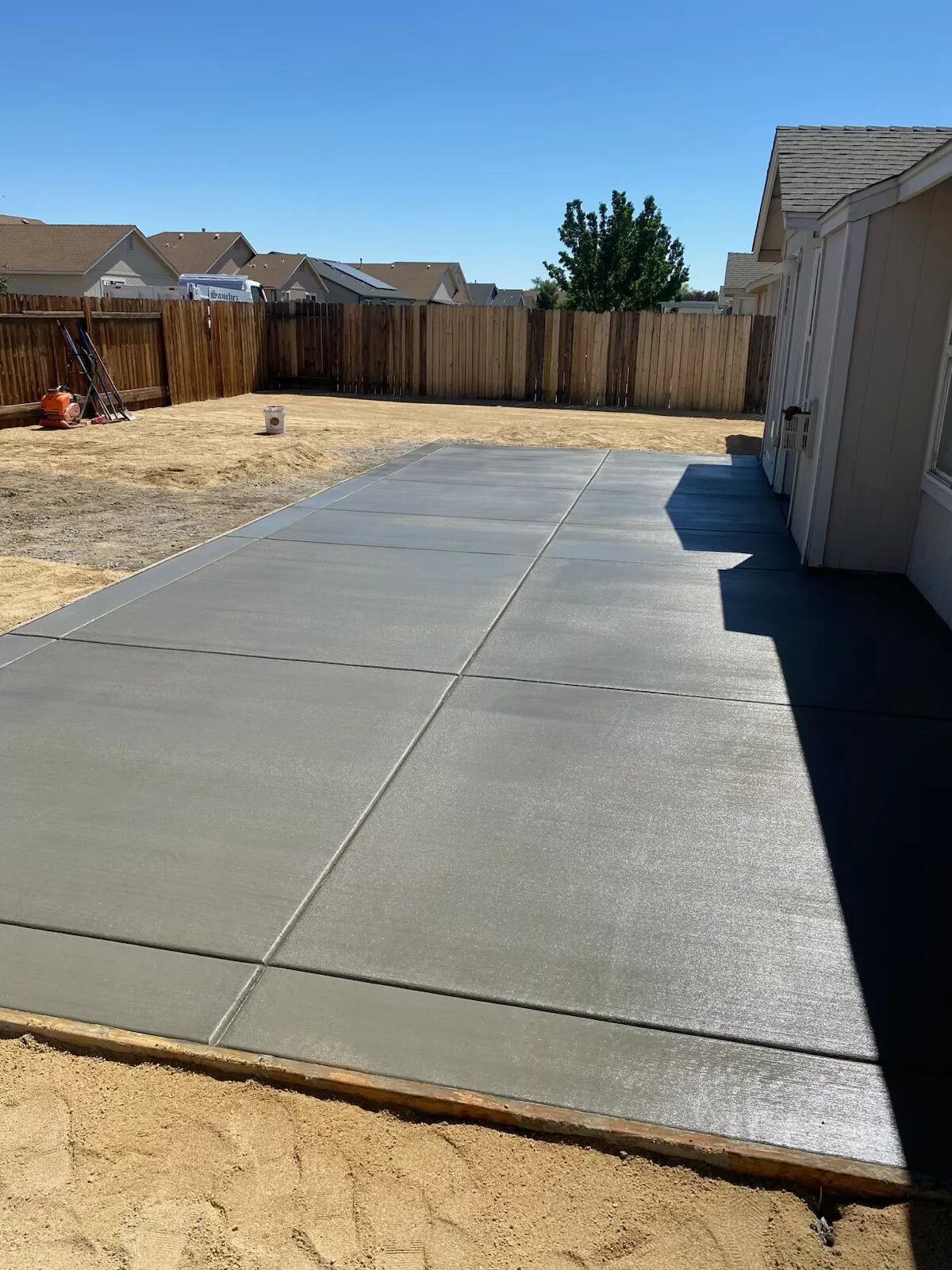
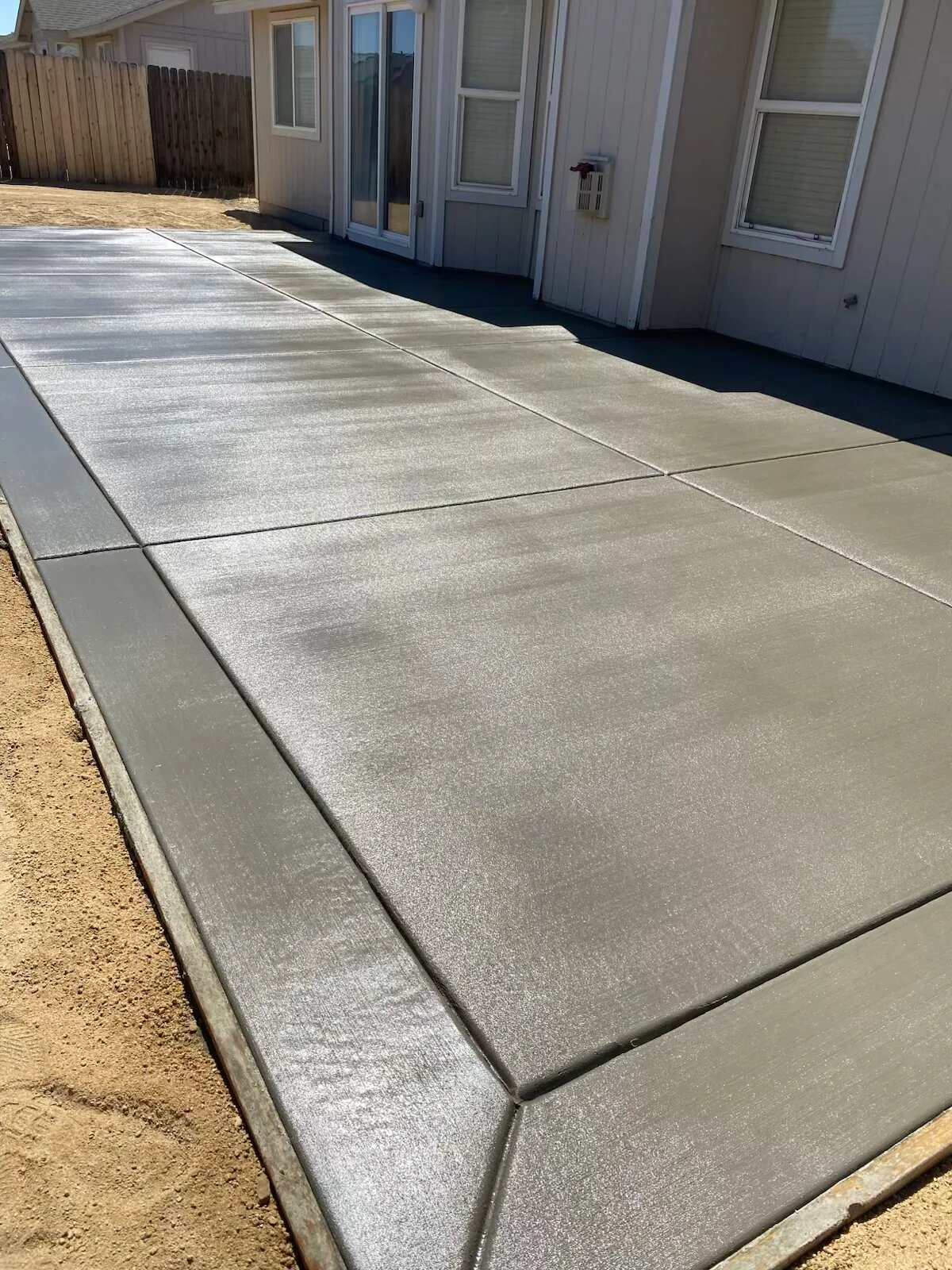
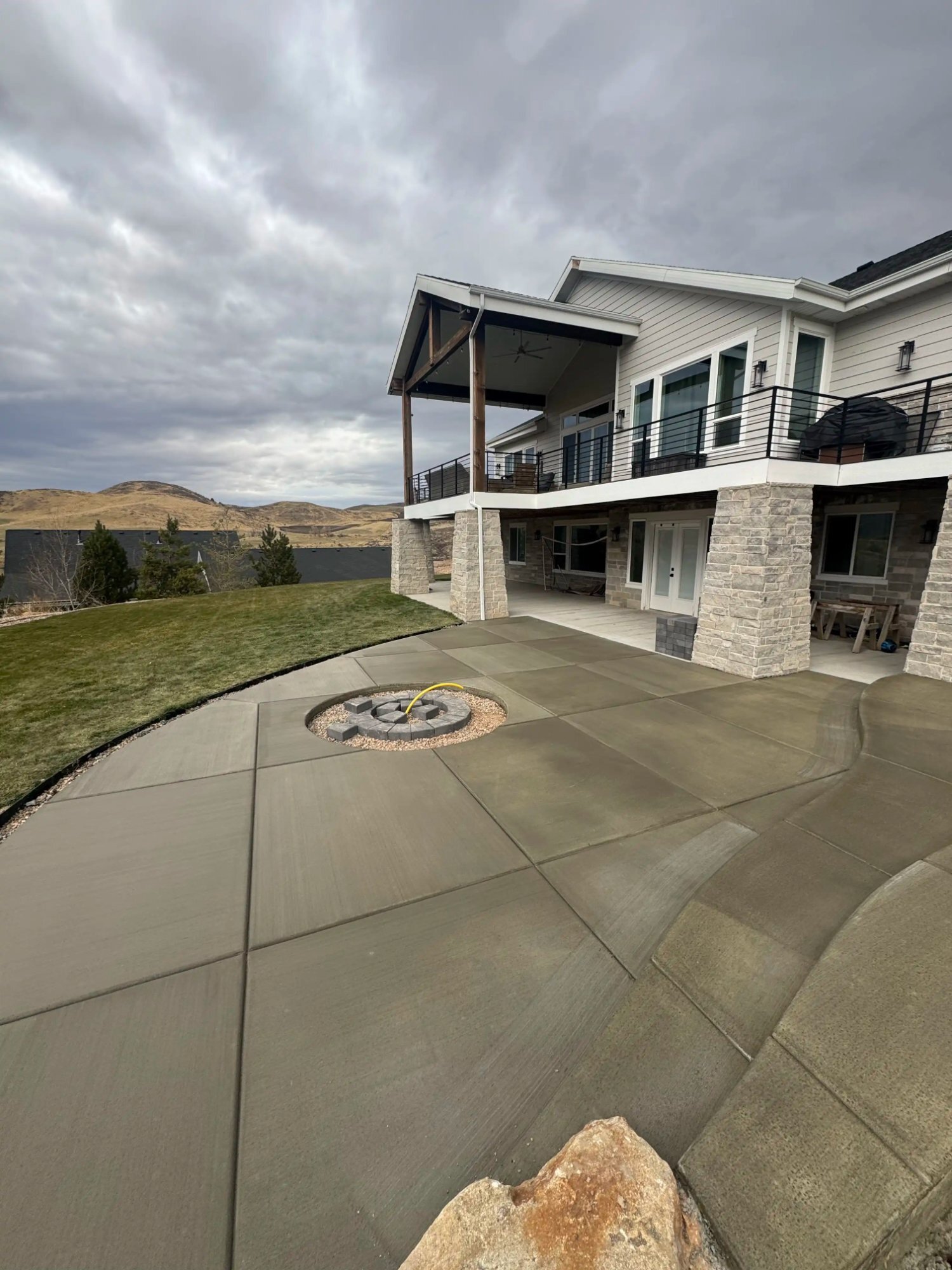
Concrete patios are the most practical hardscape choice for many Northern Utah homeowners: durable, low-maintenance, and available in a wider range of aesthetics than most people realize. A standard broom-finish patio is clean and functional. Curved edges soften the geometry and create a more organic relationship with the lawn. Exposed aggregate surfaces add visual texture. Scored or stamped concrete introduces pattern and can simulate natural stone at a fraction of the cost. And decorative saw-cut patterns — geometric grids, borders, and insets — give concrete a designed quality that elevates a simple slab into something with genuine character.
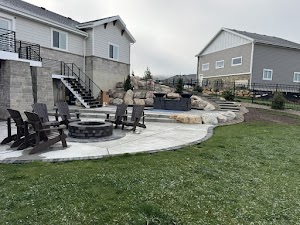
We form concrete patios to accommodate outdoor furniture, fire pits, and BBQ zones. When the project includes a fire pit, we pour a reinforced pad in the right location with a cleanout access built in. When you're adding a covered patio structure or pergola later, we pour anchor bolt sleeves into the slab so you don't have to drill through finished concrete. This kind of forward planning — thinking through what the space will become, not just what it is today — is something an experienced concrete contractor does automatically.
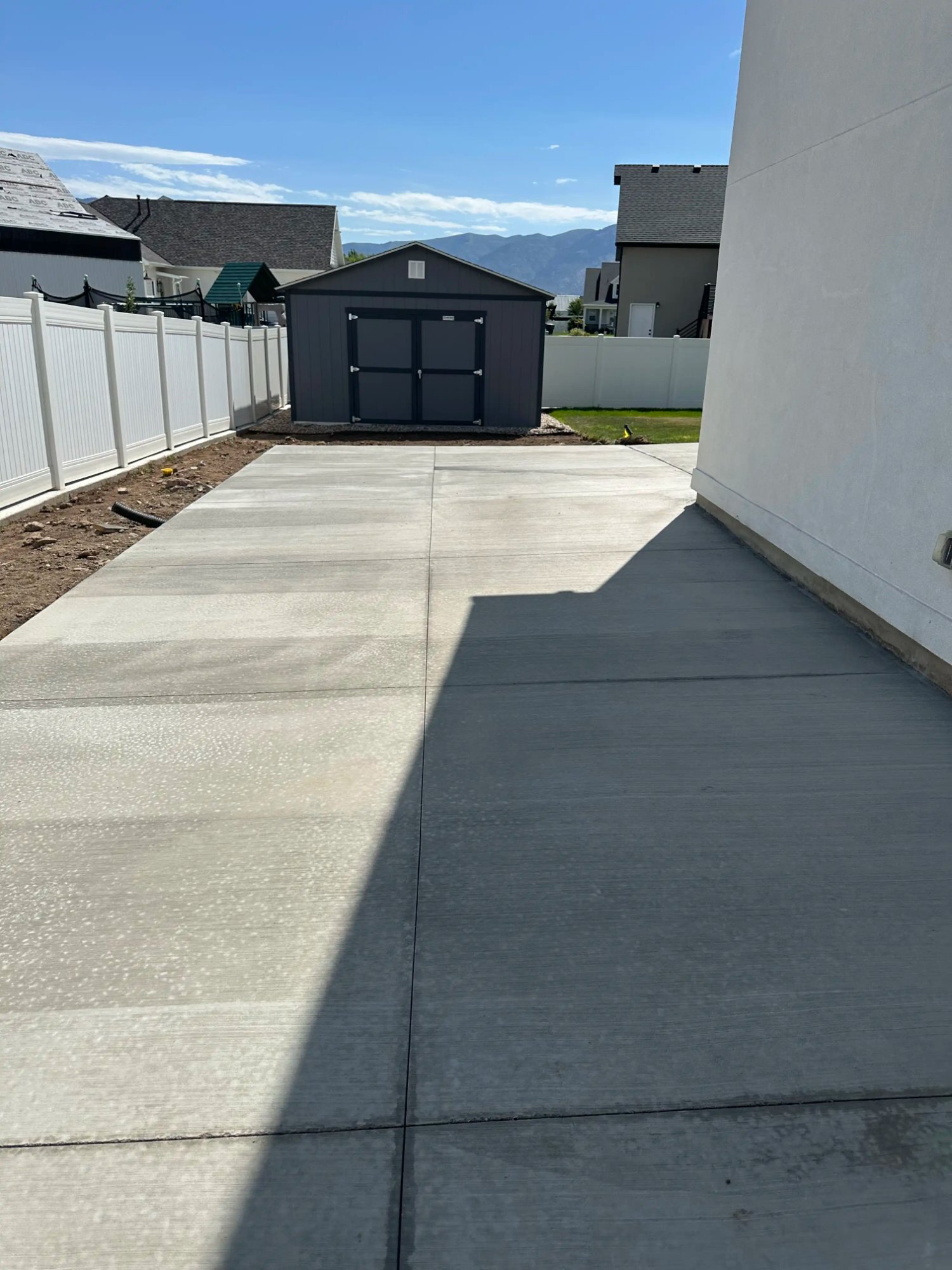
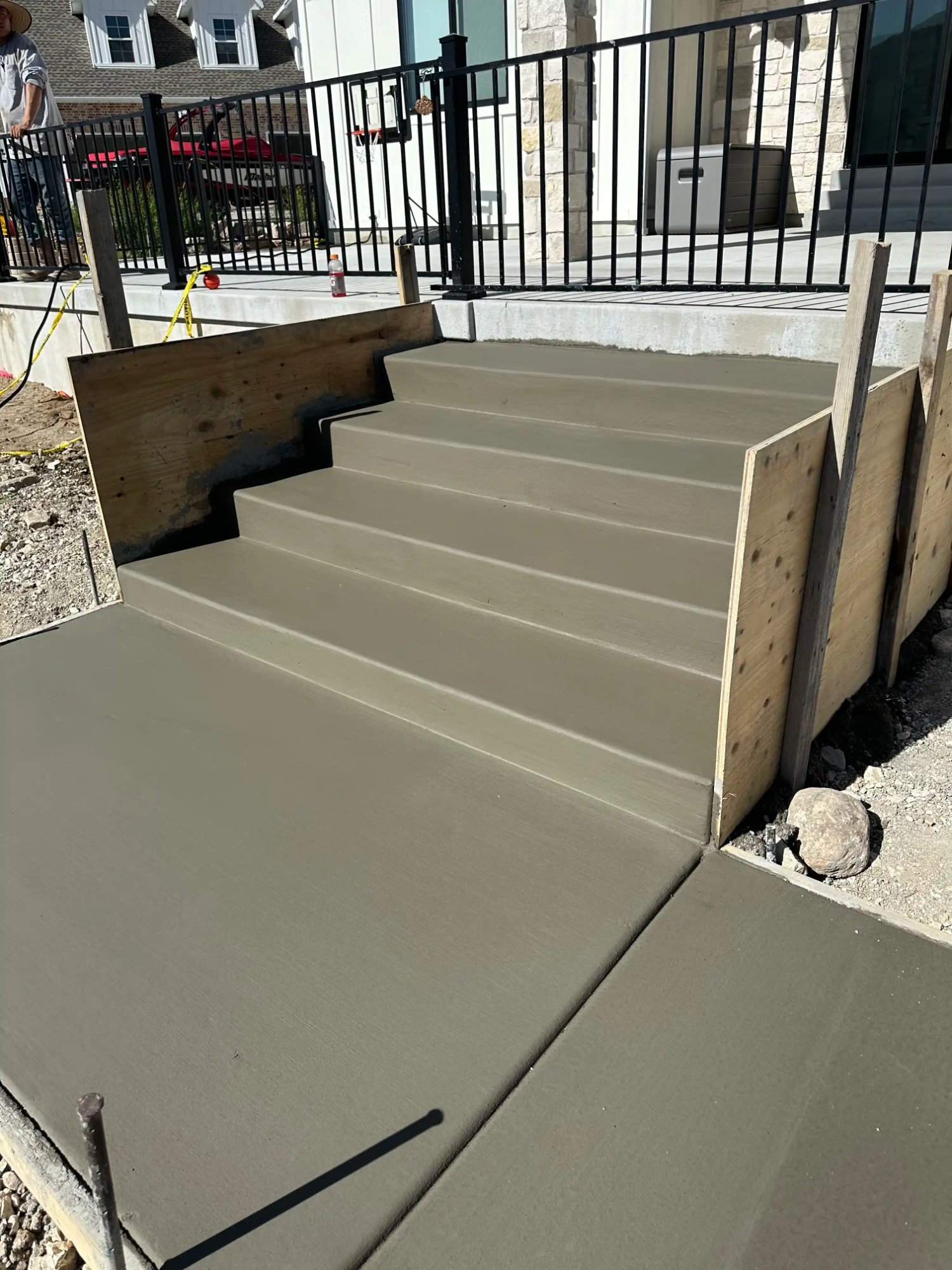
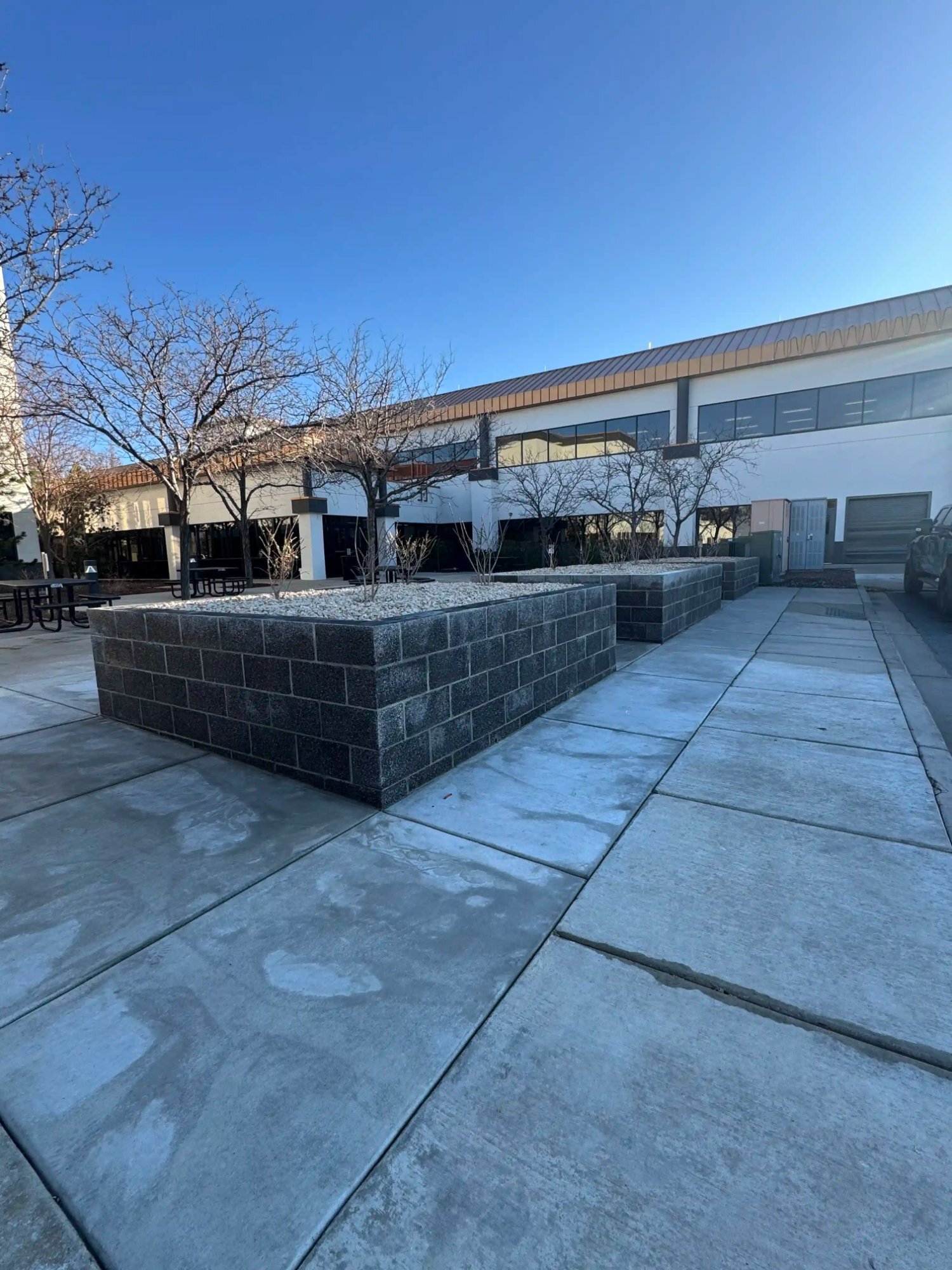
Not all concrete projects are driveways and patios. RV pads are one of our most requested specialty pours in Northern Utah — the weight of a Class A motorhome or fifth wheel requires 6-inch thickness with rebar reinforcement to prevent cracking under point loads. We build these to handle the weight without flexing, properly graded for drainage when the vehicle is parked and when it's washing down the rig. Side-yard access approaches are typically included in the same scope.
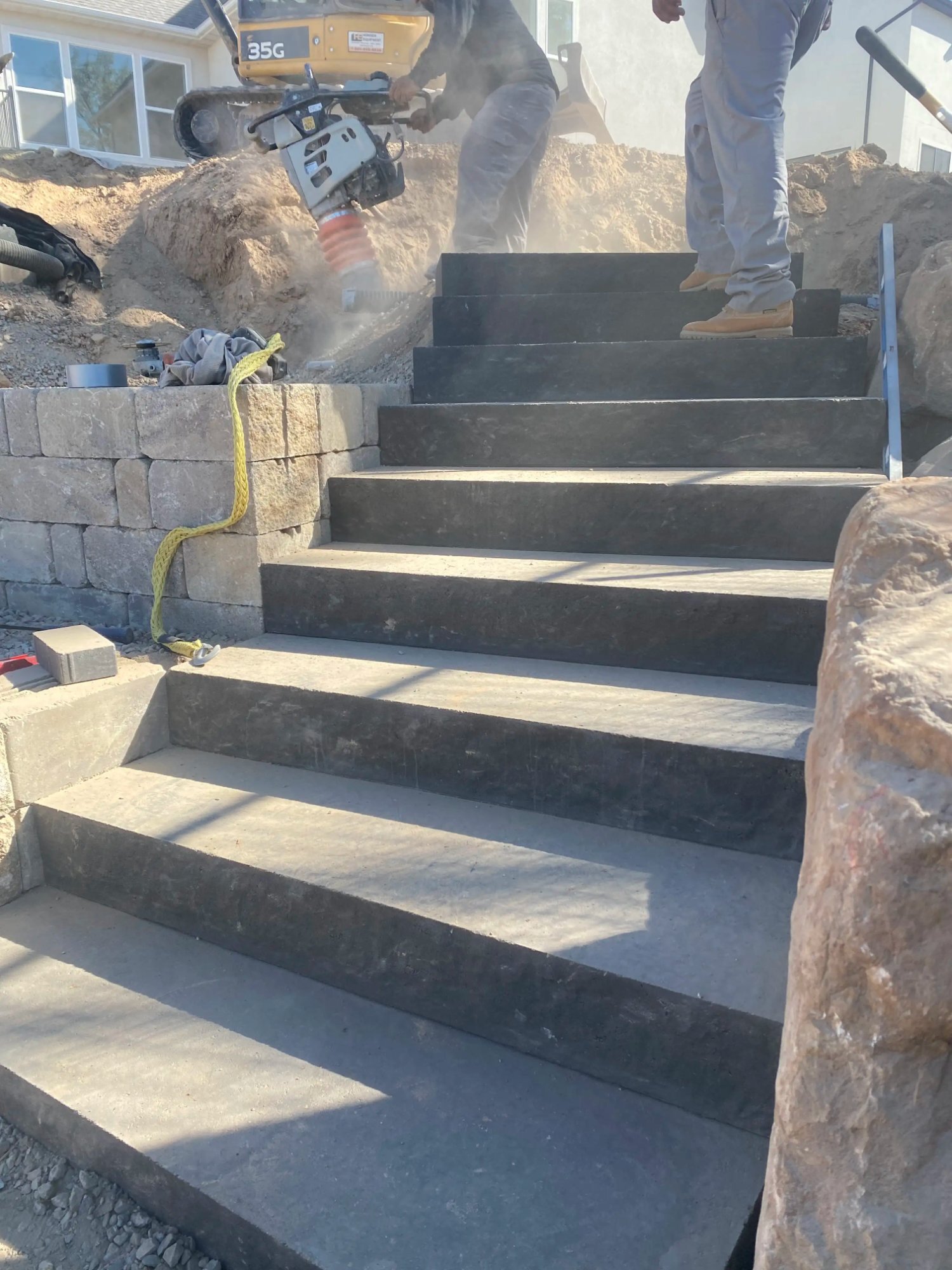
Concrete entry steps are a functional and aesthetic upgrade that's often overlooked. Crumbling or uneven front steps are a curb-appeal problem and a safety hazard. We pour steps with proper rise-to-run ratios for comfortable climbing (7" rise, 11" minimum run), adequate width for the entry, and a surface texture that provides grip in Northern Utah's icy winters. For commercial flatwork — parking lot sections, loading dock aprons, plaza paving, and planter surrounds — we bring the same engineering discipline to larger-scale projects.
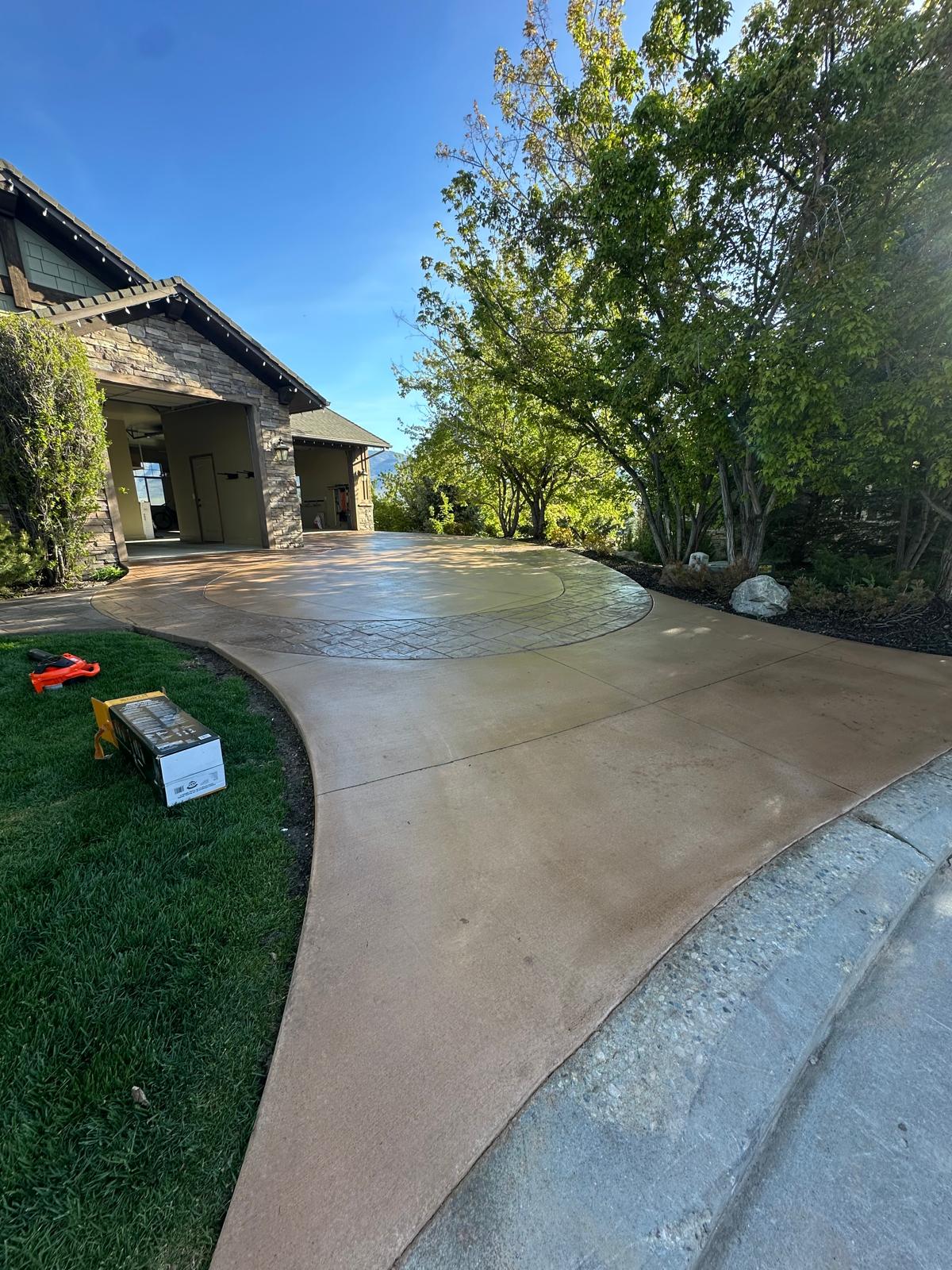
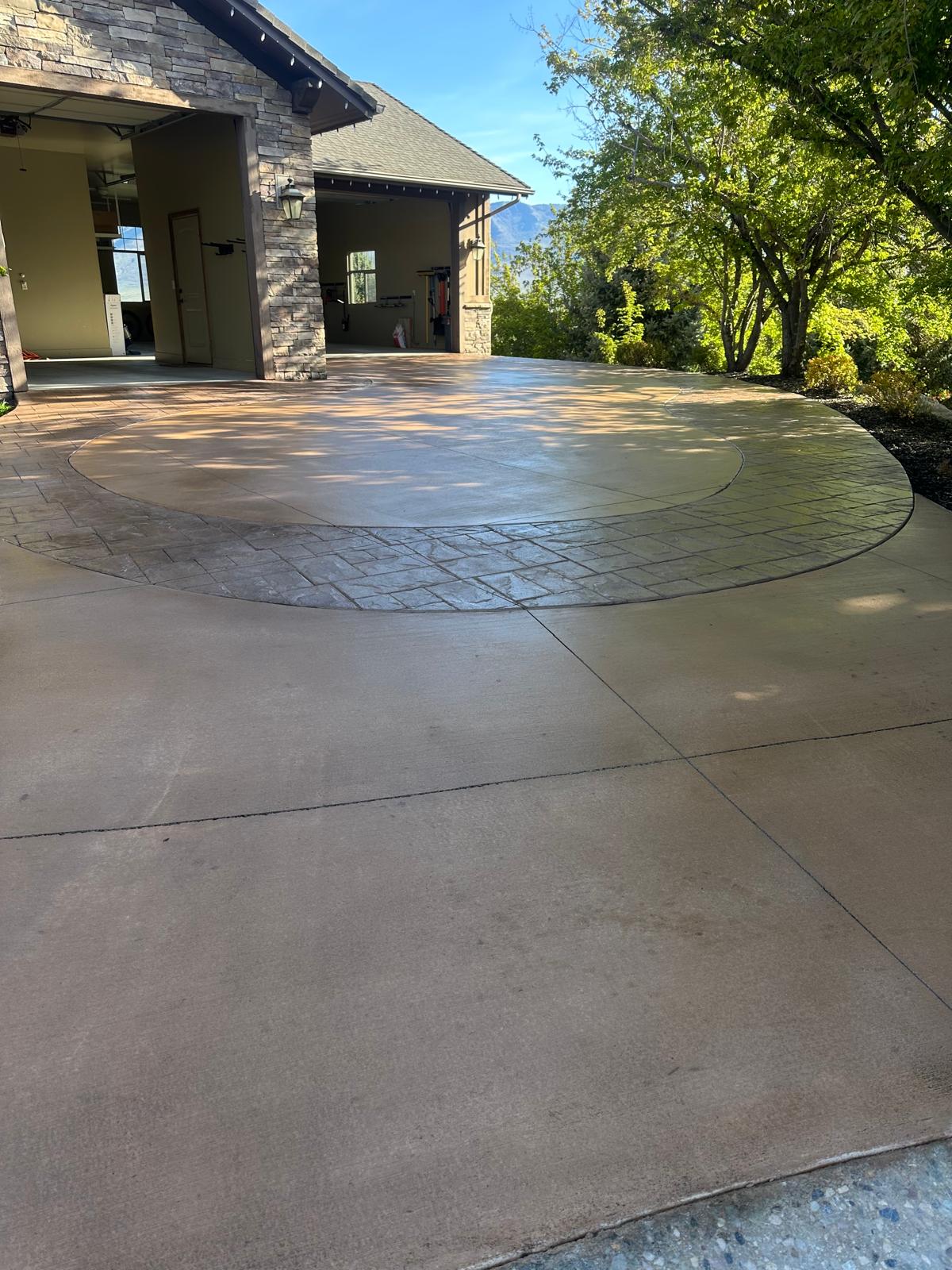
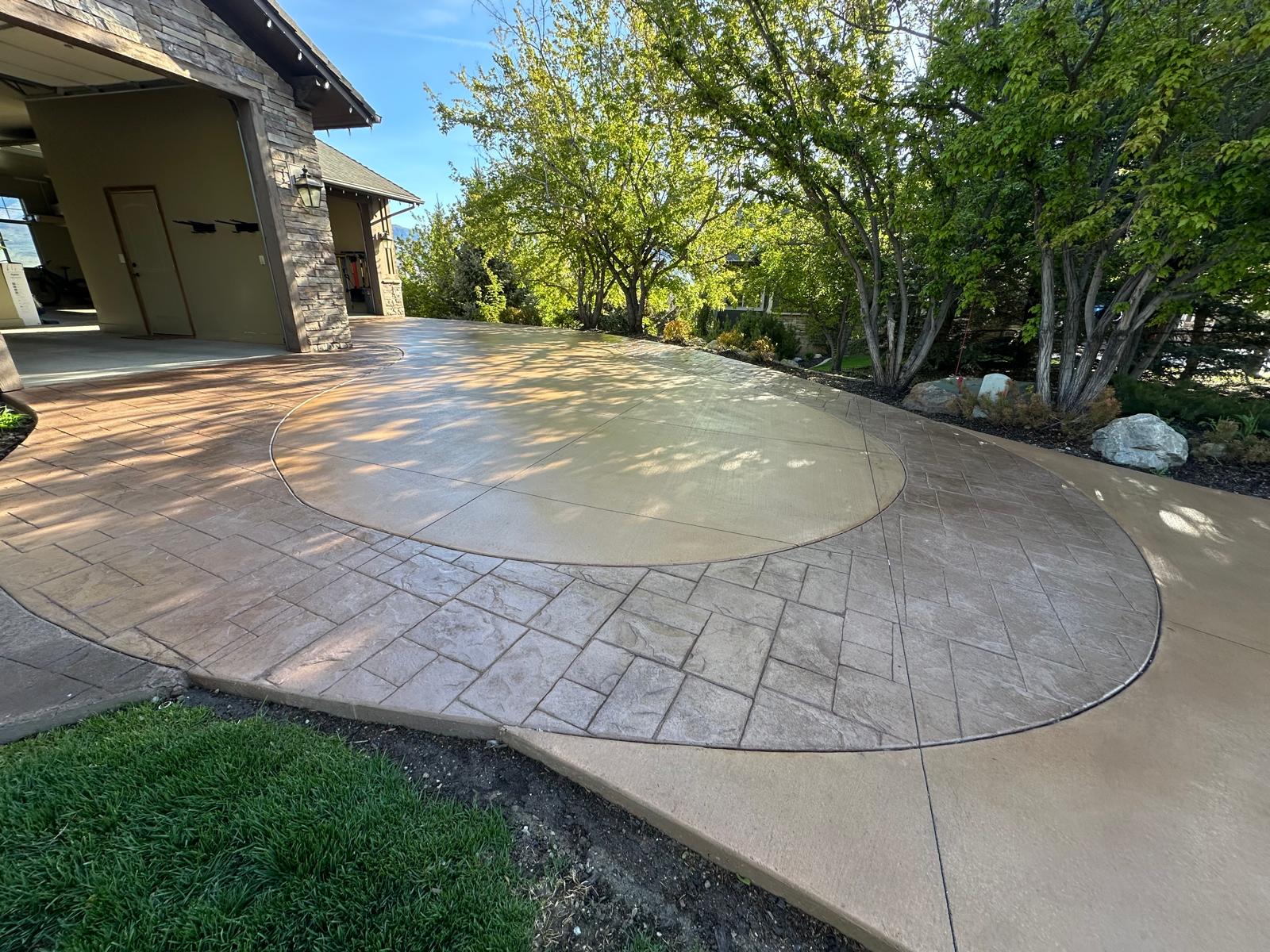
A standard broom-finish driveway is a functional surface. A stamped concrete driveway is a statement about the property it serves. The pattern pressed into the concrete — stone, slate, cobblestone, wood plank, or geometric designs — combined with integral color or broadcast color hardener creates a driveway that has the visual depth of natural stone but the structural integrity of reinforced concrete. When installed correctly in Northern Utah's freeze-thaw climate, stamped concrete holds up for decades and improves with age as the patina deepens.
Circular driveways are among the most requested stamped concrete projects in Weber County's established neighborhoods, where larger front yards can accommodate the turning radius and homeowners want an entry aesthetic that matches the scale of their home. We design circular approaches with a center planting island, proper bilateral drainage, and material patterns that complement the home's stone, brick, or cladding. From the street, the result reads immediately as a premium property — the kind of curb presence that raises the entire block.
We measure, we plan, we pour carefully. Your estimate includes everything — demolition, haul-off, base prep, forms, reinforcement, pour, finish, and curing. No surprises.
Get Your Free Concrete EstimatePatios: 4 inches. Driveways: 5–6 inches. RV pads and areas with heavy vehicle loads: 6 inches with rebar. Reducing thickness to save money is the most common way contractors cut corners — and the reason slabs crack prematurely. We match thickness to load, every time.
Every pour we do is reinforced — rebar on 18-inch centers for driveways and structural slabs, synthetic fiber for patios where rebar is impractical. Reinforcement doesn't prevent cracking at control joints (that's the point of control joints) but it holds the concrete together if an unexpected crack occurs, preventing the pieces from shifting.
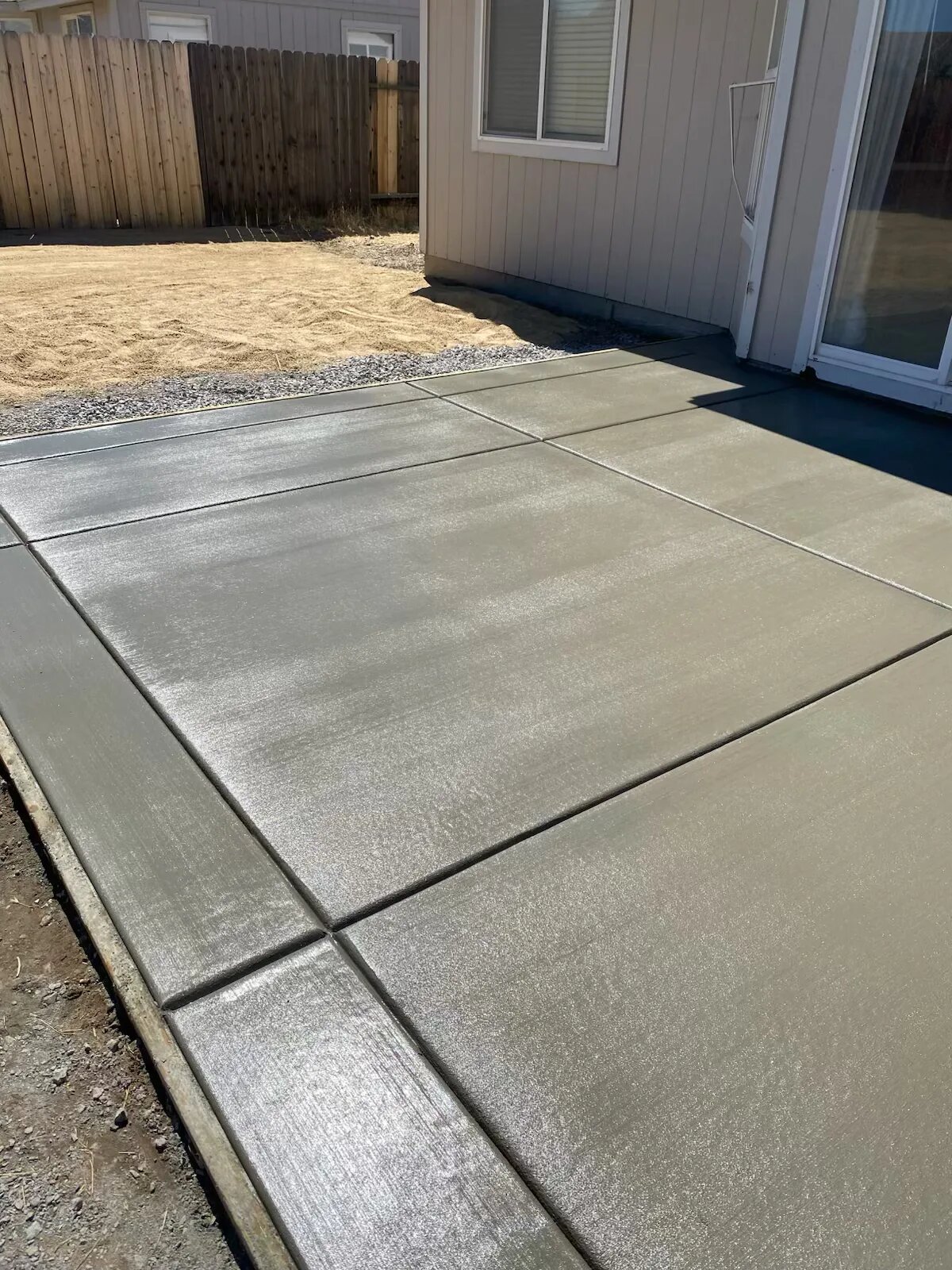
We plan control joint layouts before we pour, not after. The joint spacing and depth determine where the slab cracks — we invite cracking to happen in straight lines that look intentional. A slab with properly designed control joints ages well; a slab poured without them cracks randomly and looks like it failed.
Concrete poured on unstable or poorly compacted base will settle unevenly, creating lips and uneven drainage. We compact the sub-base before forming, verify grade for drainage, and add base material where needed. Skipping this step is the second most common way contractors produce failing concrete.
Every concrete surface we pour is graded at a minimum 1/8" per foot slope away from structures. Water that doesn't drain properly pools, freezes, expands, and accelerates spalling and cracking. We verify grade with levels during forming, not after the concrete is poured.
Concrete achieves most of its strength over the 28 days after the pour. We don't rush projects. We apply curing compound or keep concrete moist as conditions require, and we give you realistic guidance on when to put foot and vehicle traffic on your new surface. Rushing curing produces surface scaling and weakened concrete.
EC Scaping pours concrete throughout the Northern Utah corridor. We are active in Ogden, South Ogden, North Ogden, Pleasant View, Roy, Layton, Kaysville, Farmington, Centerville, and Bountiful. In Weber County's hillside communities — where driveways often run at a meaningful grade and where the freeze-thaw cycle is more demanding — we have a decade of experience designing concrete systems that handle the conditions. Getting the drainage slope right on a sloped driveway, getting the control joint spacing right on a long pour, getting the rebar placement correct in a driveway that an RV crosses twice a week: these are the details we're dialed in on.
In Davis County — including Layton, Kaysville, Farmington, and Centerville — we work regularly in the newer residential subdivisions where builders often leave concrete installation to homeowners. We also serve the Ogden Valley communities of Eden and Huntsville for concrete work on mountain properties where access can be challenging and where the climate is even more demanding. If you're in Northern Utah and need concrete work done right, we'd welcome the opportunity to give you an estimate.












Concrete flatwork in Northern Utah runs $8–$18 per square foot depending on thickness, reinforcement, finish, and whether demolition of existing concrete is included. A standard 500 sq ft driveway runs $4,000–$9,000. RV pads are typically $3–$6 per square foot more than standard patio pours due to extra thickness and reinforcement. Decorative options (stamped, scored, exposed aggregate) add $4–$10 per sq ft over standard broom finish. We give exact quotes after a free on-site measurement.
Foot traffic is typically safe after 24–48 hours in normal temperature conditions. Vehicle traffic should wait 7 days minimum; we recommend 10–14 days before allowing heavy vehicle loads like trucks or RVs. Concrete reaches approximately 90% of its design strength at 28 days. In cooler temperatures (below 50°F), curing slows, and we adjust our guidance accordingly. We give you specific instructions based on your pour conditions.
Sealing is optional for most flatwork but beneficial in Utah's climate. A penetrating sealer helps resist de-icing salt damage and reduces water absorption, which reduces the spalling that freeze-thaw cycling causes in unsealed concrete. For decorative or stamped concrete, sealing is strongly recommended — it protects the finish and maintains color. We can seal concrete on installation or advise you on products and timing if you prefer to seal it yourself.
Concrete can be poured in cold weather with proper precautions: heated water in the mix, ground thaw before pouring, insulating blankets during curing, and minimum ambient temperatures above 40°F during the curing window. We do work in shoulder seasons (March–April, October–November) with appropriate cold-weather protocols. We won't pour on frozen ground or when nighttime lows are forecast to drop below freezing during the critical curing period without adequate protection.
Both are viable driveway materials. Asphalt is typically less expensive upfront but requires sealing every 3–5 years and has a shorter lifespan (15–25 years versus 30–50+ for concrete). Concrete is more durable, requires less maintenance, stays cooler in summer, and offers a wider range of aesthetic options. In Utah's climate, both perform well when properly installed. We do concrete; for asphalt we can refer you to a qualified paving contractor.
We measure the space, check the existing conditions, and give you an exact quote. No per-square-foot guesses. No surprise add-ons. What we quote is what you pay.
Tell us about your project. We'll visit your property, listen to your vision, and give you honest feedback and pricing — no obligation.