
From concept to installation — planting design, sod, irrigation, and xeriscape solutions for Northern Utah homes that deserve more than default landscaping.
A paver patio is more impressive when it's framed by mature plantings. A retaining wall looks intentional when the terraces above it are planted with purpose. A new concrete driveway looks like an upgrade when the front yard around it is designed rather than planted by default. This is the relationship between hardscape and landscape — each makes the other look better. When they're designed together, the property looks finished in a way that isolated elements never achieve.
Landscape design in Northern Utah is a specific discipline. The soils are different here — often heavy clay in valley areas, rocky and thin on the bench. The water situation is real: Weber County gets 16–18 inches of precipitation annually, most of it as snow, which means everything you plant in summer depends on irrigation to survive until it's established. The growing season is compressed — last frost late April, first frost mid-October — which defines what plants can reliably perform. And the temperature swings between summer and winter are significant enough that plants you'd use in Salt Lake can fail in Ogden Valley's colder microclimate.
We've spent years developing plant palettes and design approaches that work for Northern Utah specifically — not national landscape trends applied without regard for local conditions. When we design your landscape, we're drawing on direct experience with what thrives and what struggles in Ogden, Kaysville, Farmington, and the higher-elevation communities of Weber County.
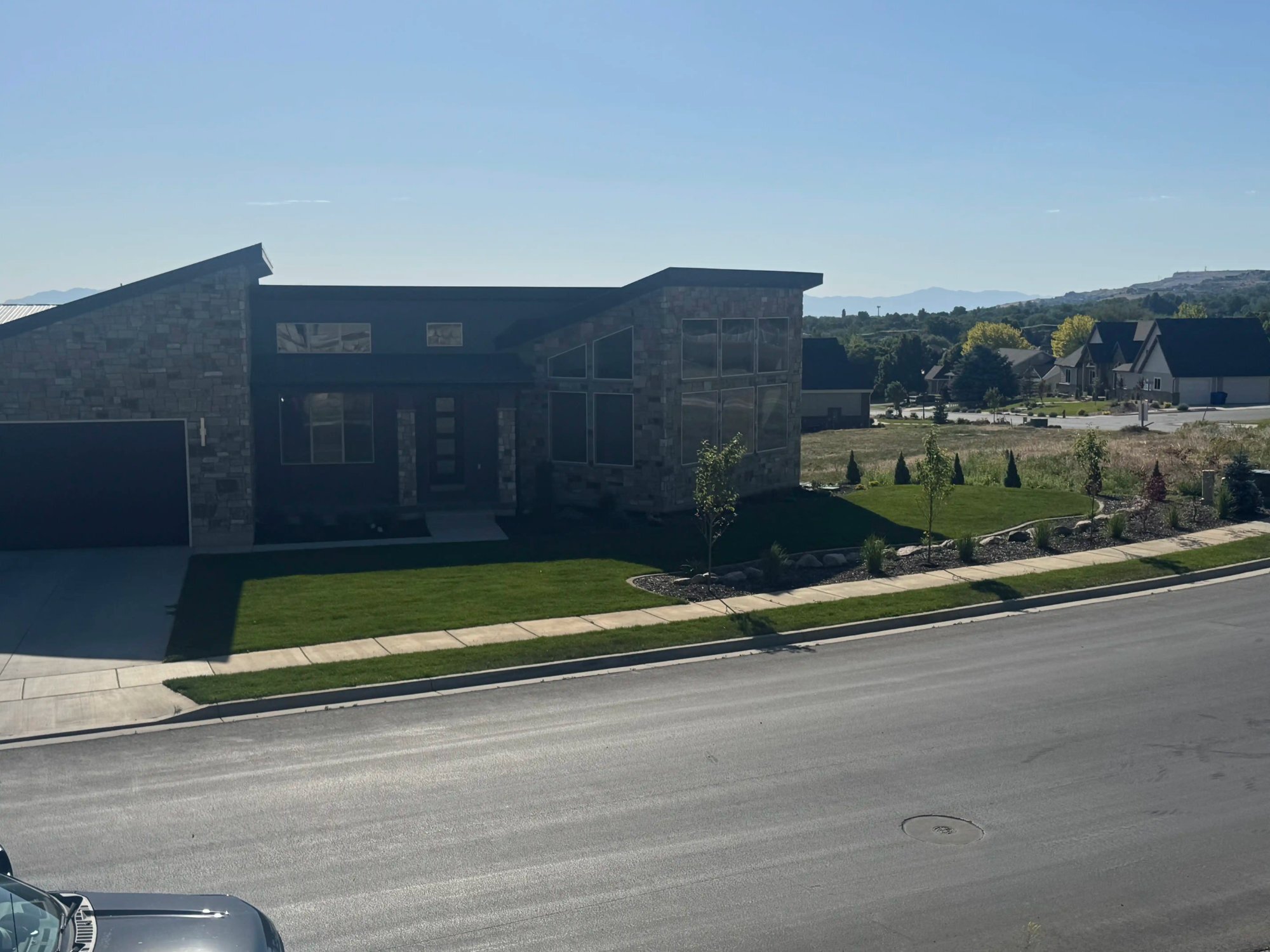
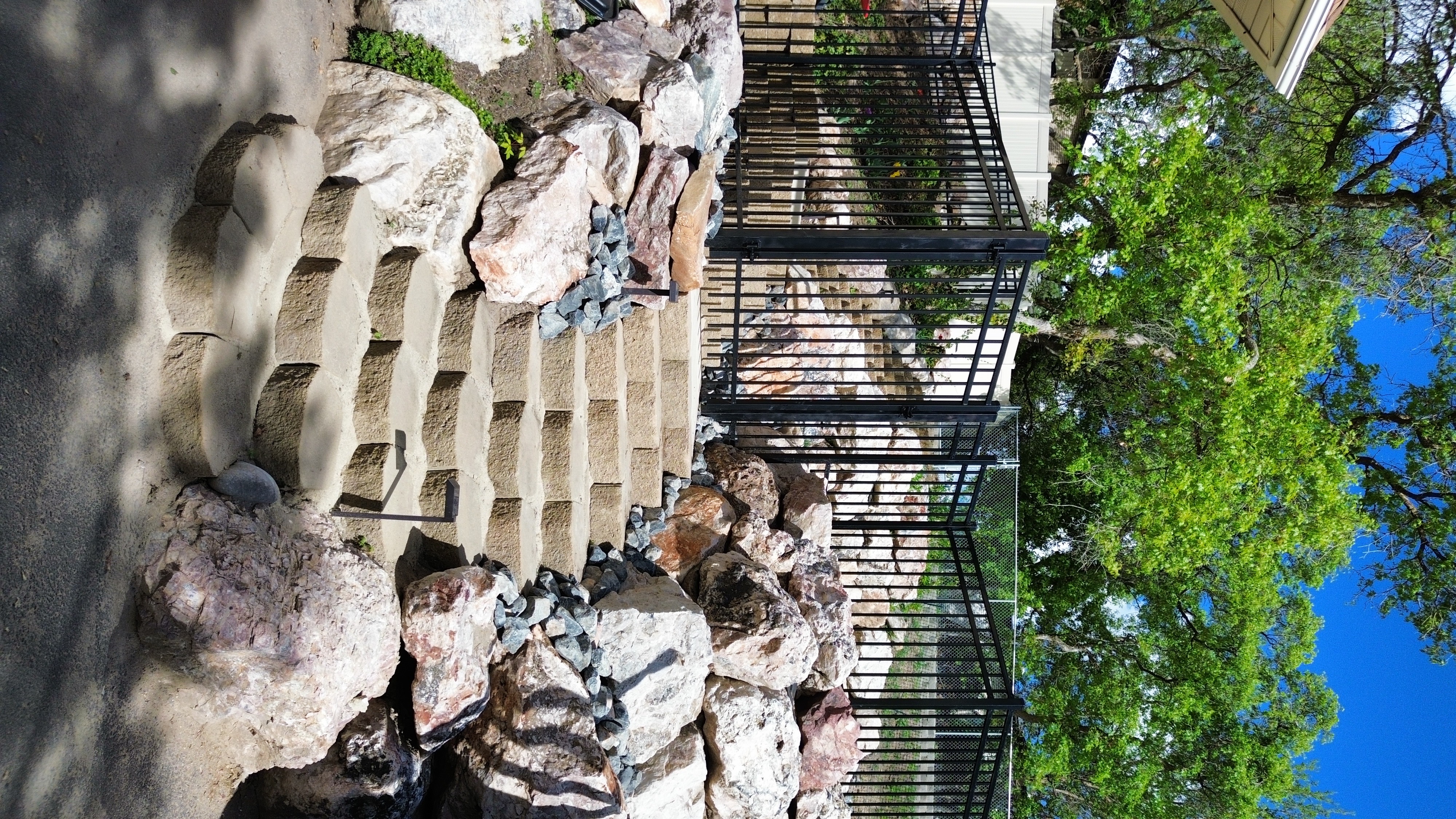
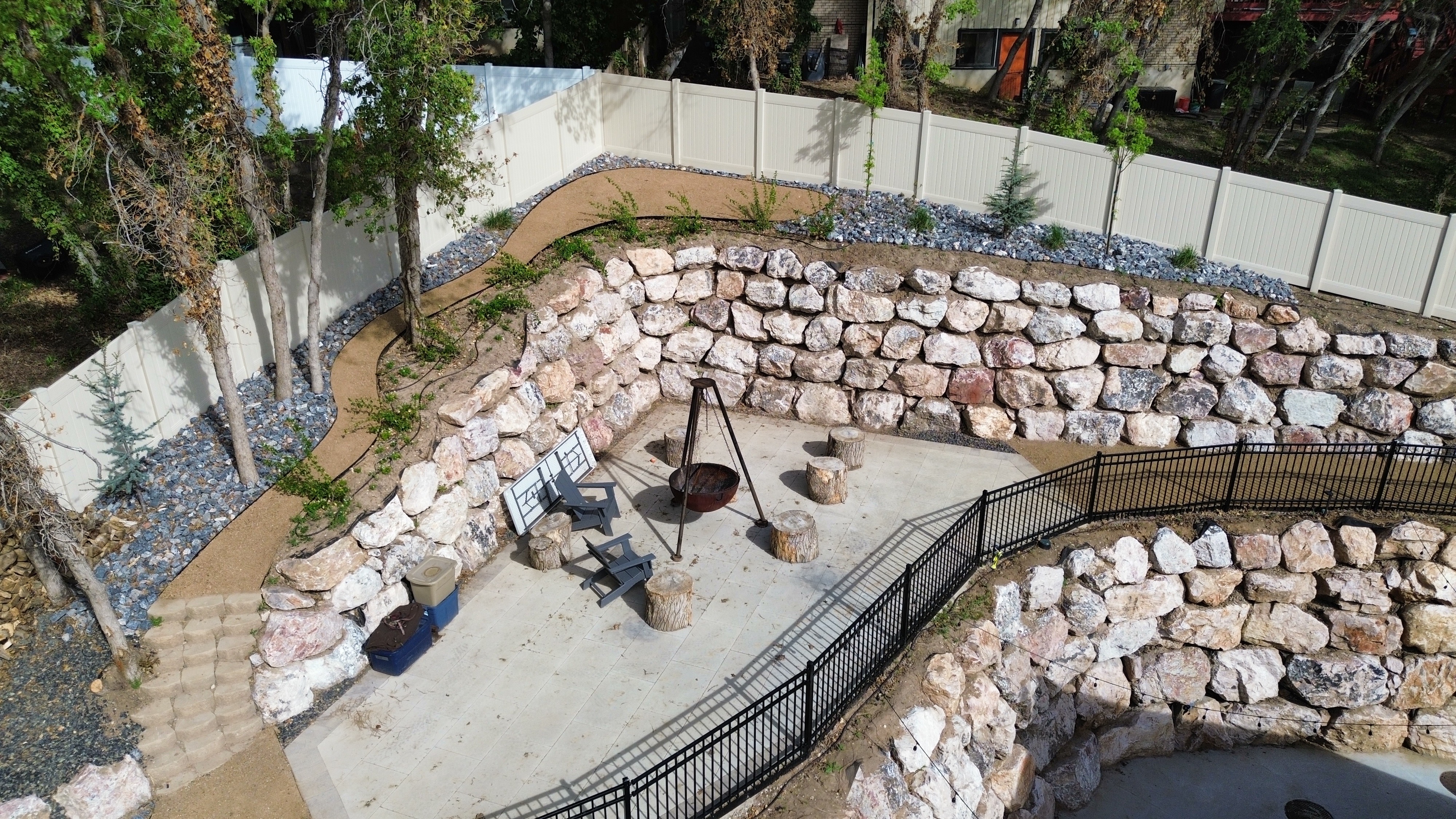
Our full landscape design service starts with listening — to what you want the space to feel like, how much maintenance you're willing to do, what your water budget is, what your timeline looks like. We walk the property, assess sun exposure and soil conditions, note existing plants worth keeping, and identify problem areas like drainage low spots or erosion zones. From that site analysis we build a design: a planting plan with specific species, locations, and sizes, a grading plan if needed, and an irrigation design that matches the plant palette.
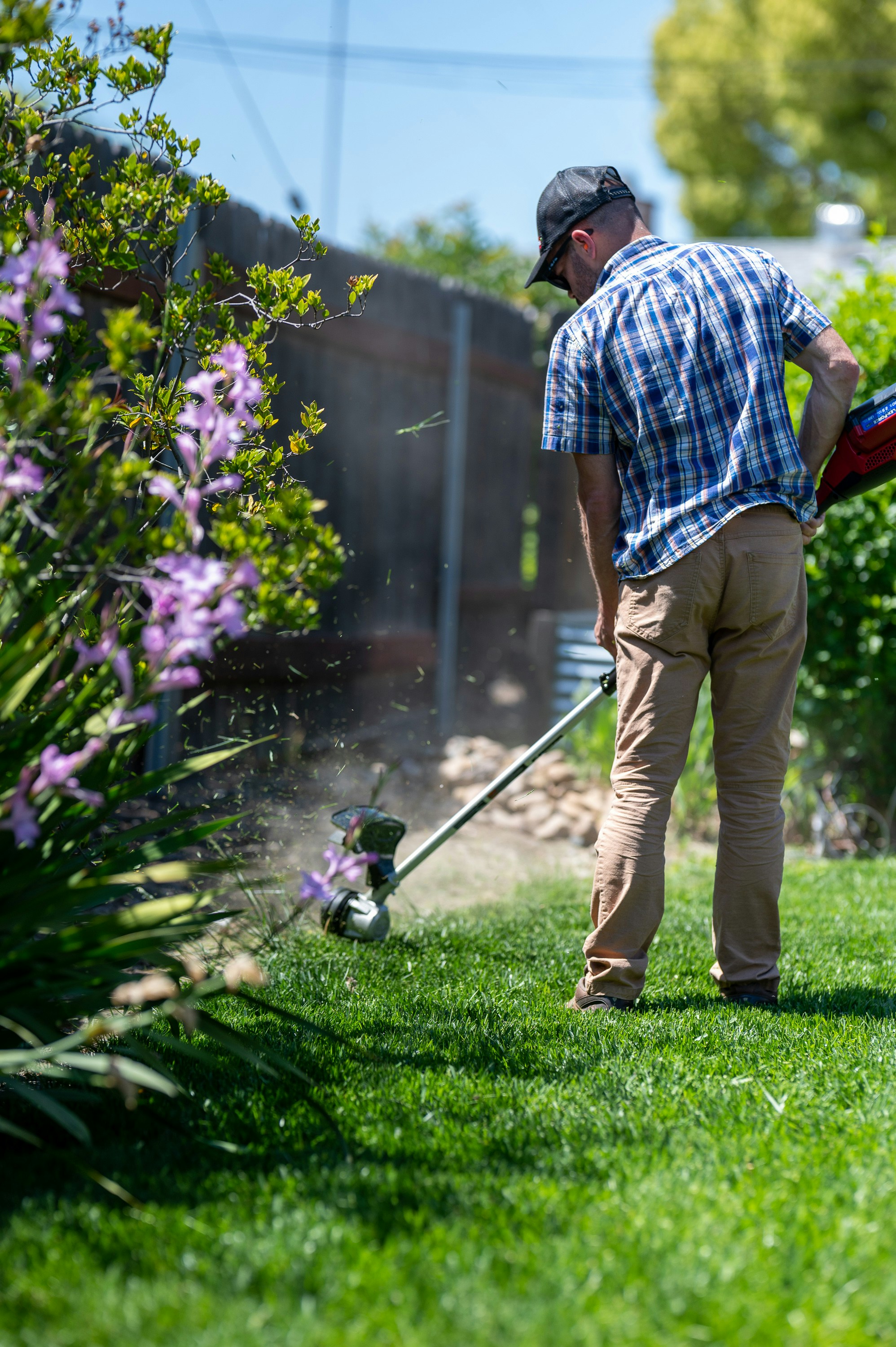
Installation follows the design exactly. We source plants through reputable local nurseries familiar with Utah conditions, plant at correct depths and spacing, apply appropriate soil amendments for the specific species, mulch to code depth for moisture retention, and set up the irrigation system for each zone before we leave. Then we walk you through the irrigation controller, the plant care notes, and what to watch for in the first season. A landscape installation is the beginning of a relationship between you and your plants — we want you to know how to take care of what we've built.
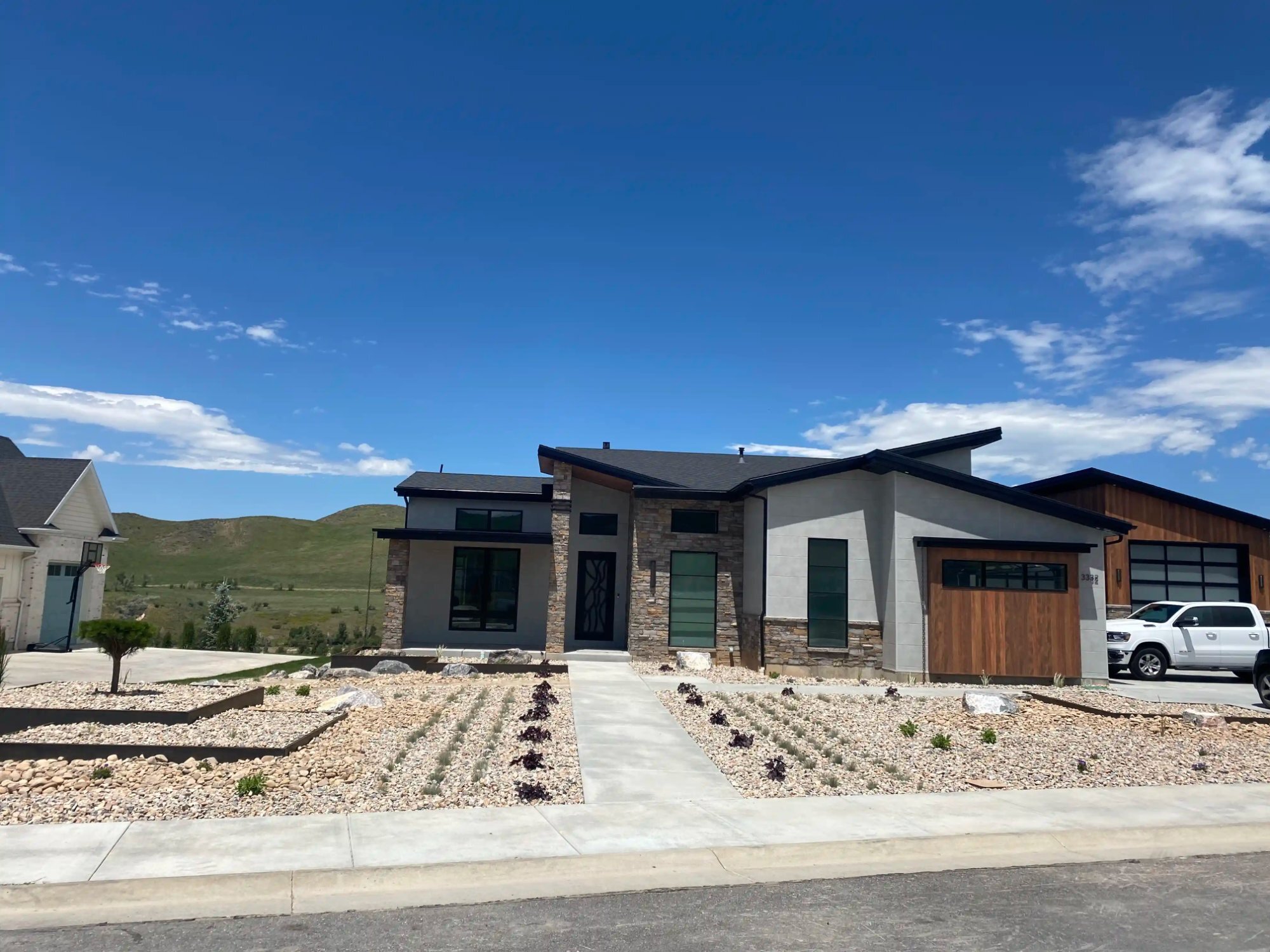
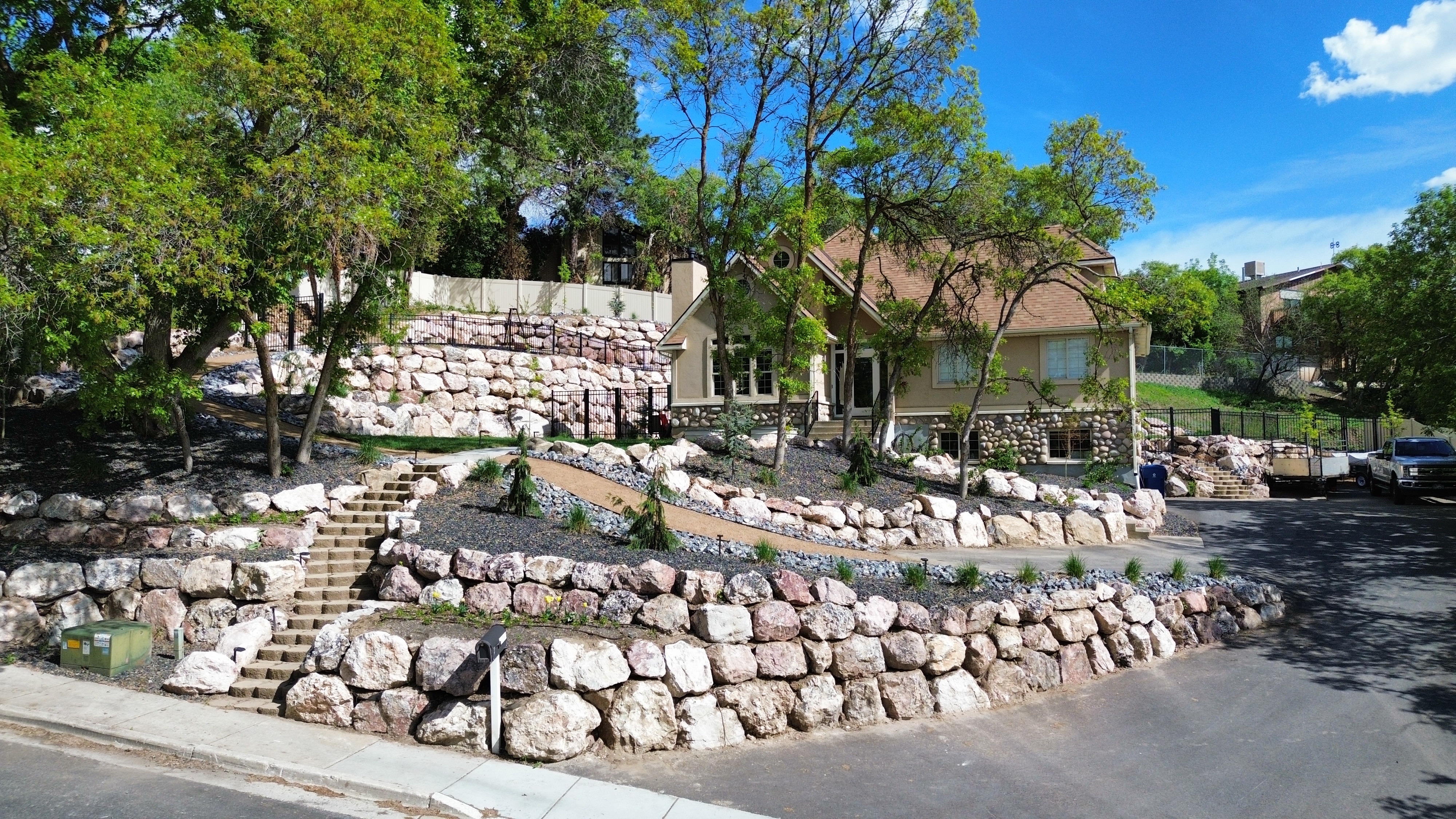
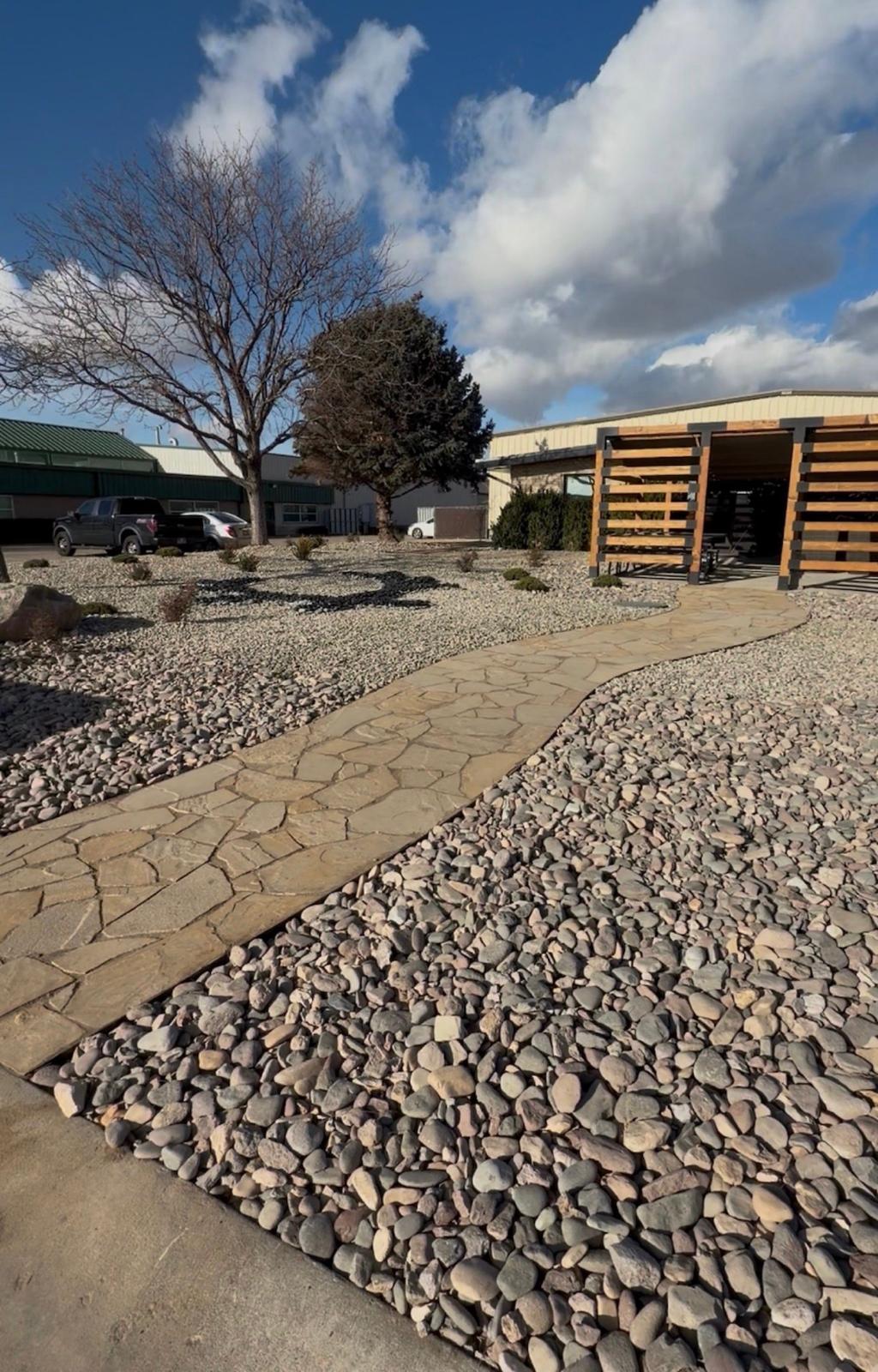
Water-conscious landscaping isn't a compromise — when done well, it's the most beautiful and sustainable choice for a Northern Utah property. Modern xeriscape design uses flowering ornamental grasses, lavender, native sages, serviceberry, drought-tolerant perennials, and carefully placed decorative rock in compositions that look intentional and attractive through all four seasons. The plants we select for xeriscape projects are specifically chosen for Northern Utah's soil and climate — not generic drought-tolerant plants from a national catalog, but species we know perform at our elevation and in our soils.
The practical benefit is significant: a well-designed xeriscape front yard can reduce your outdoor water use by 50–75% compared to a traditional bluegrass lawn. In a region where outdoor water accounts for the majority of summer consumption, that's a meaningful reduction in both cost and environmental impact. Weber County's water conservation incentives often partially offset the installation cost. We help clients navigate these programs as part of the consultation process.
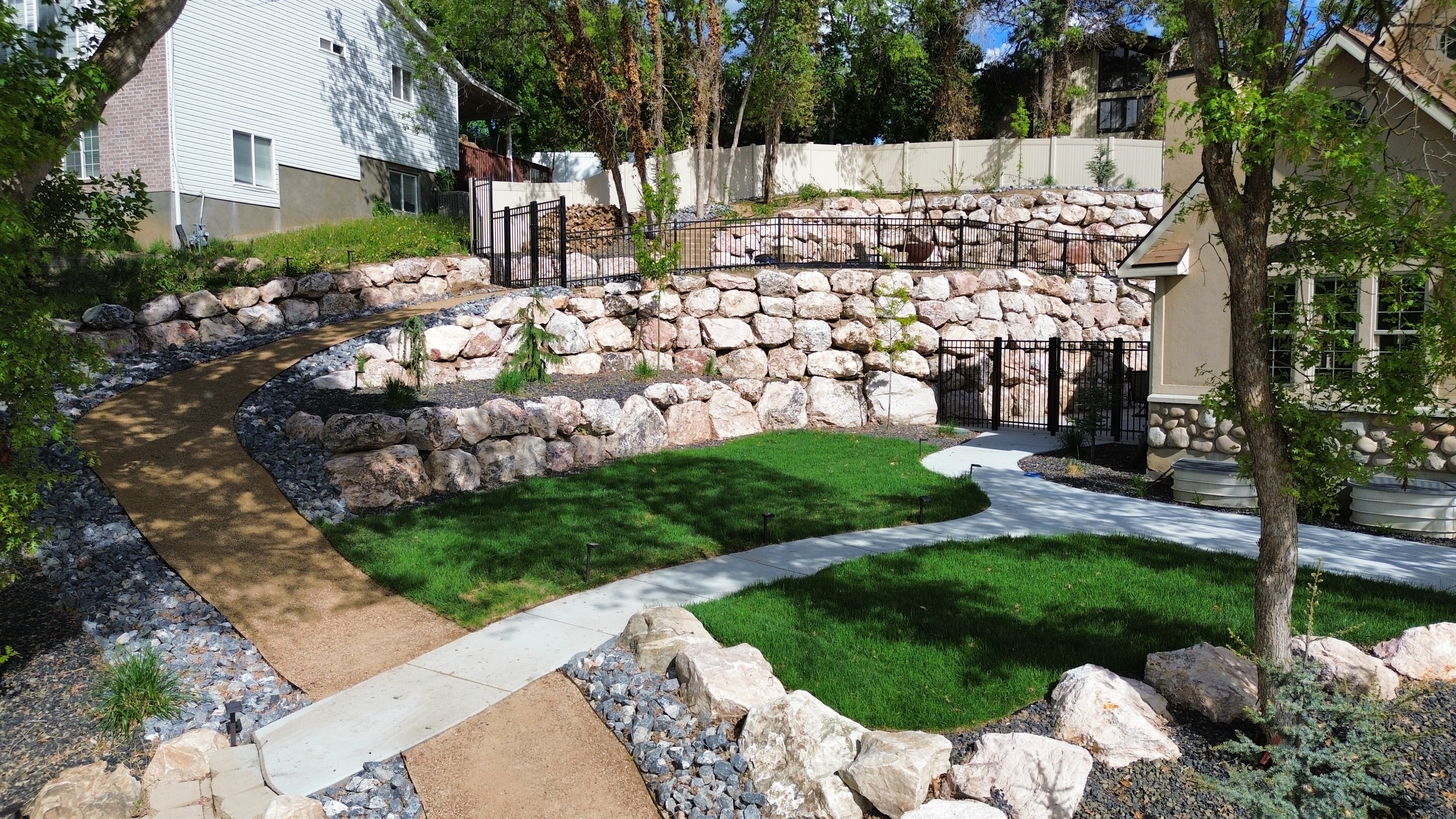
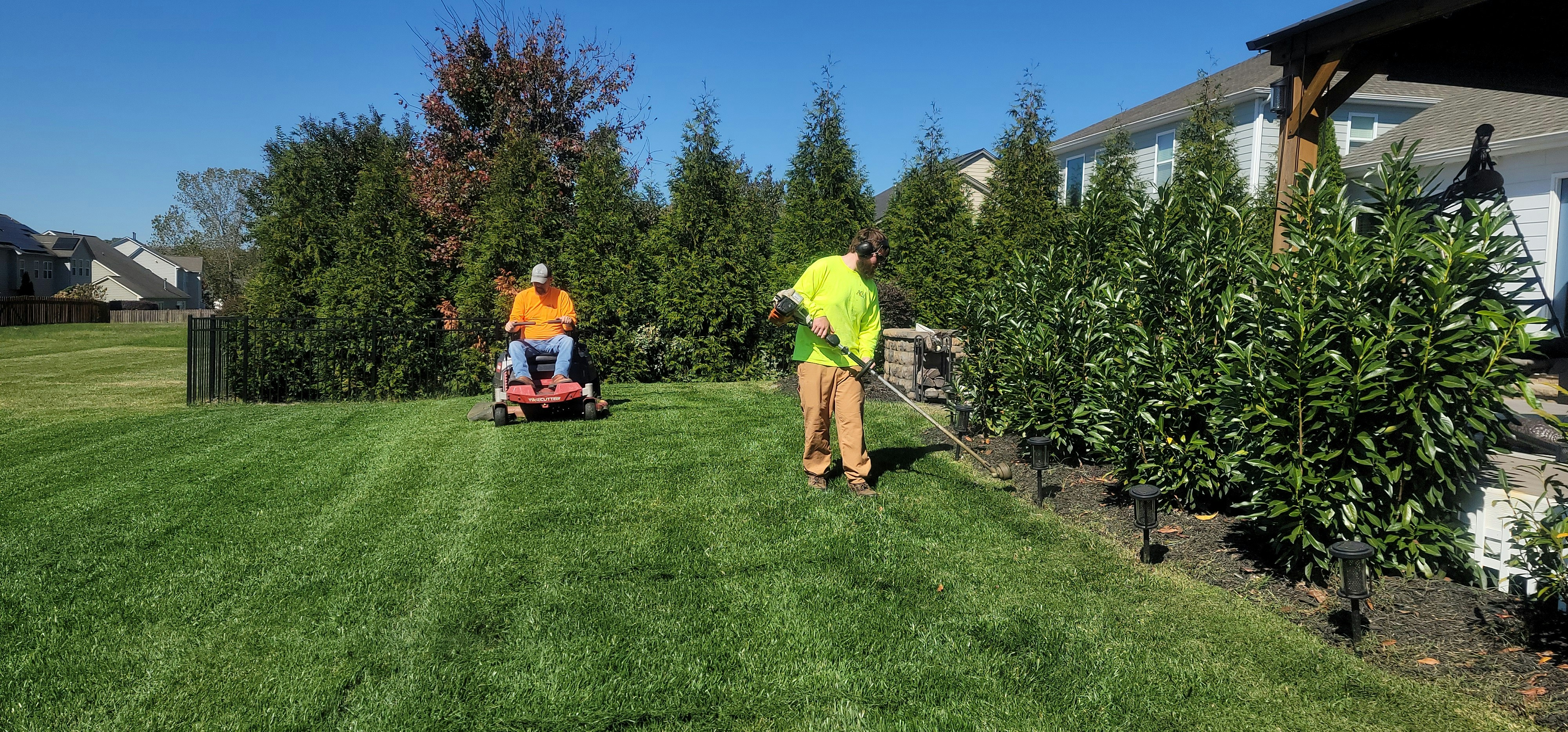
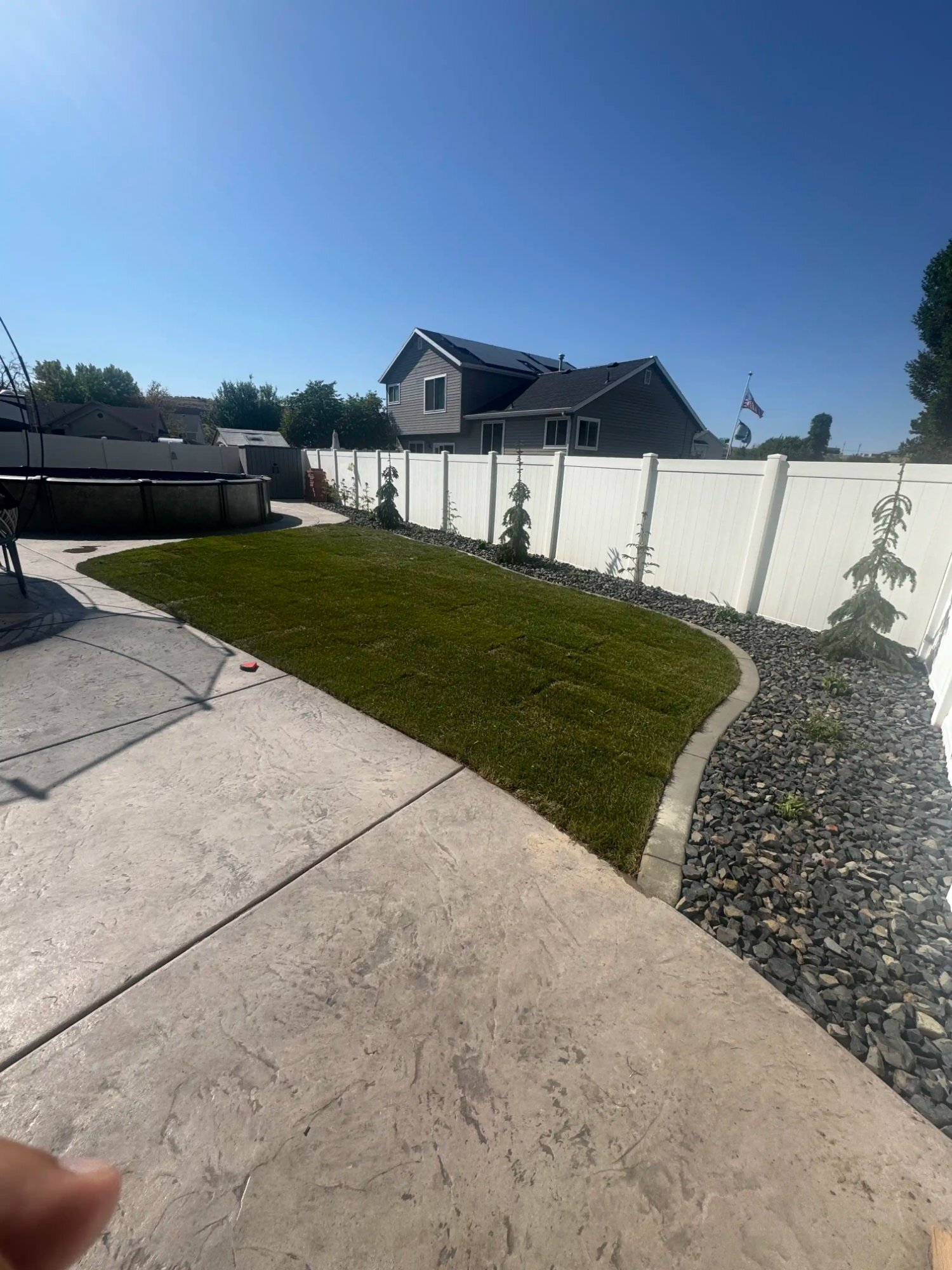
When you want an established lawn immediately — not in three years — sod is the answer. We source fresh sod from Utah growers, graded and cut at the farm within 24–48 hours of your installation date. We prepare the soil with appropriate amendments for our clay-heavy regional soils, grade for drainage, and lay the sod in tight courses with staggered joints for seamless appearance. The installation day result is a lawn that looks established. With proper watering in the establishment period (typically 2–4 weeks), you'll have a root system you can count on.
Every sod installation we do includes irrigation system design and installation as the default assumption — because sod without proper irrigation doesn't establish. Our irrigation systems are designed zone by zone based on the actual sun exposure, slope, and plant types in each area. We install drip lines for tree wells and planting beds separately from spray heads for lawn areas. Smart controllers allow you to set watering schedules by zone and adjust seasonally. And we program everything before we leave so you're not guessing.
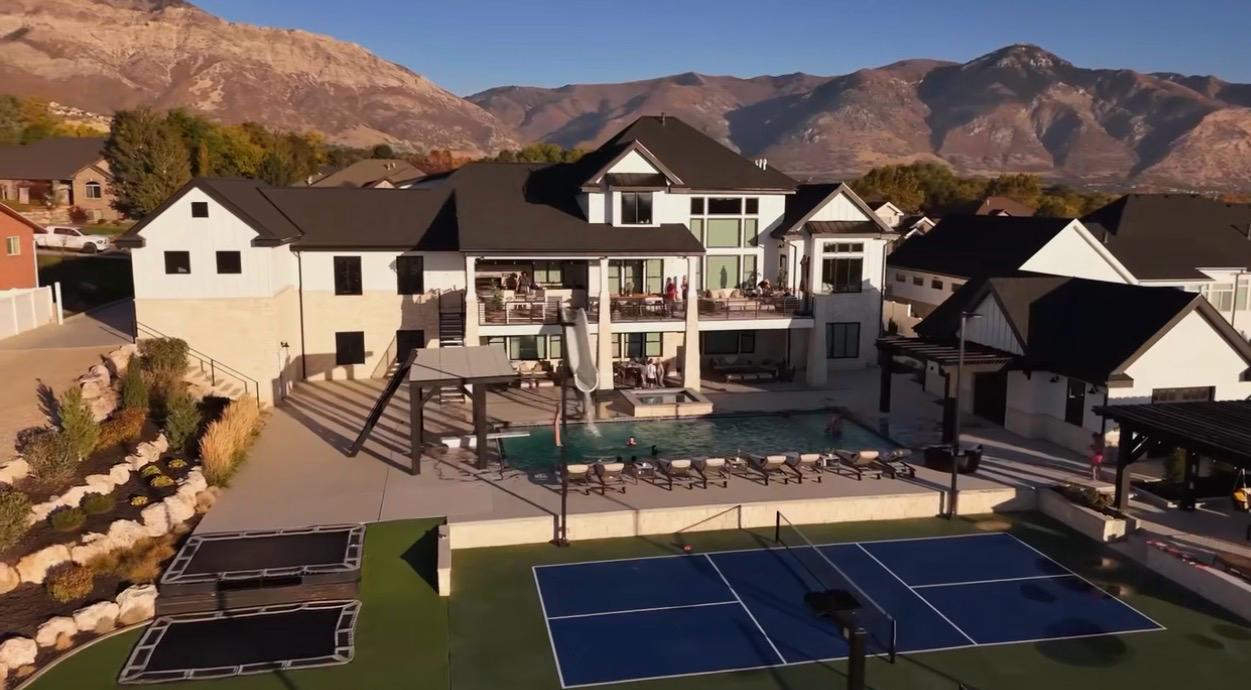
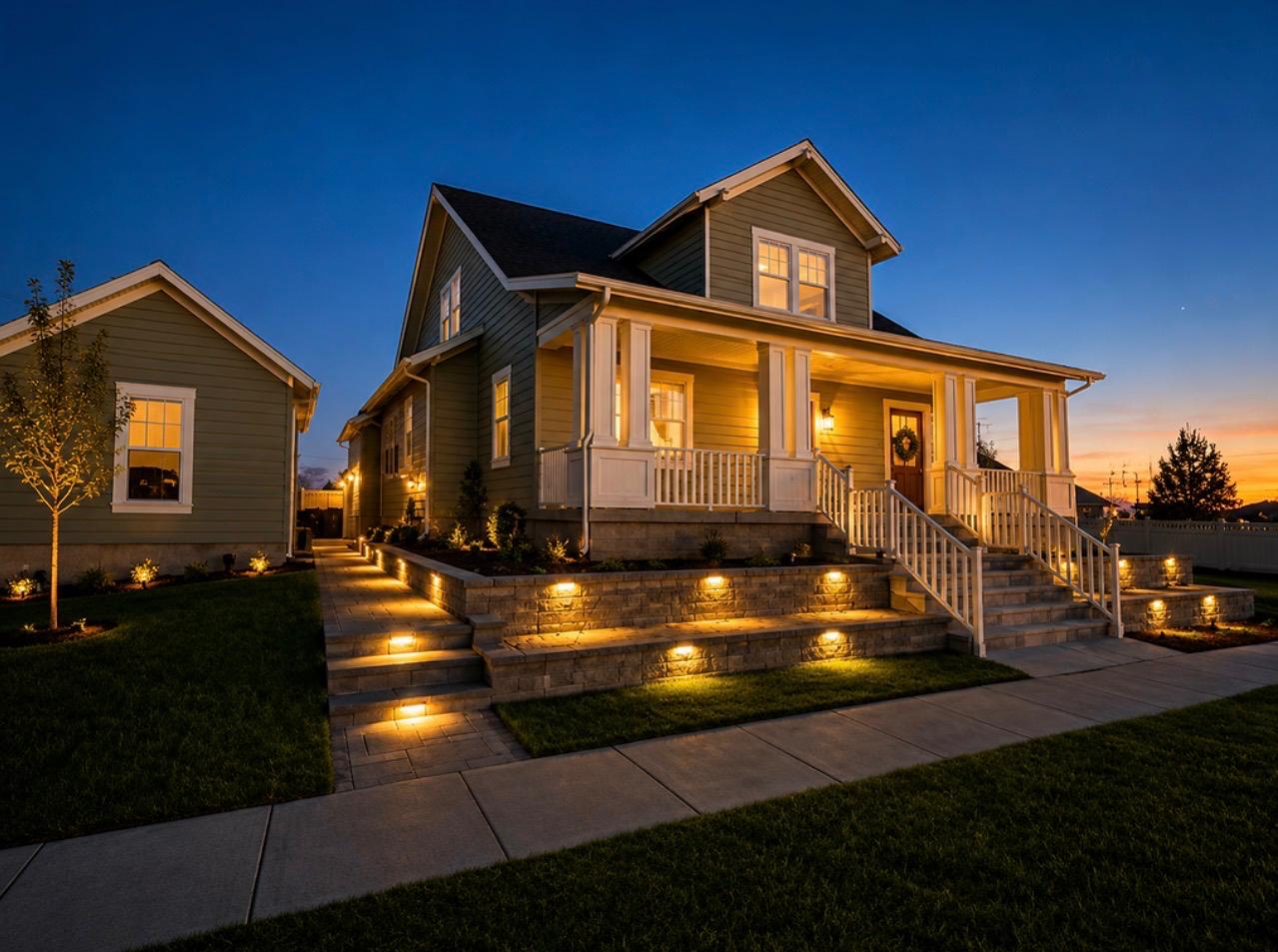
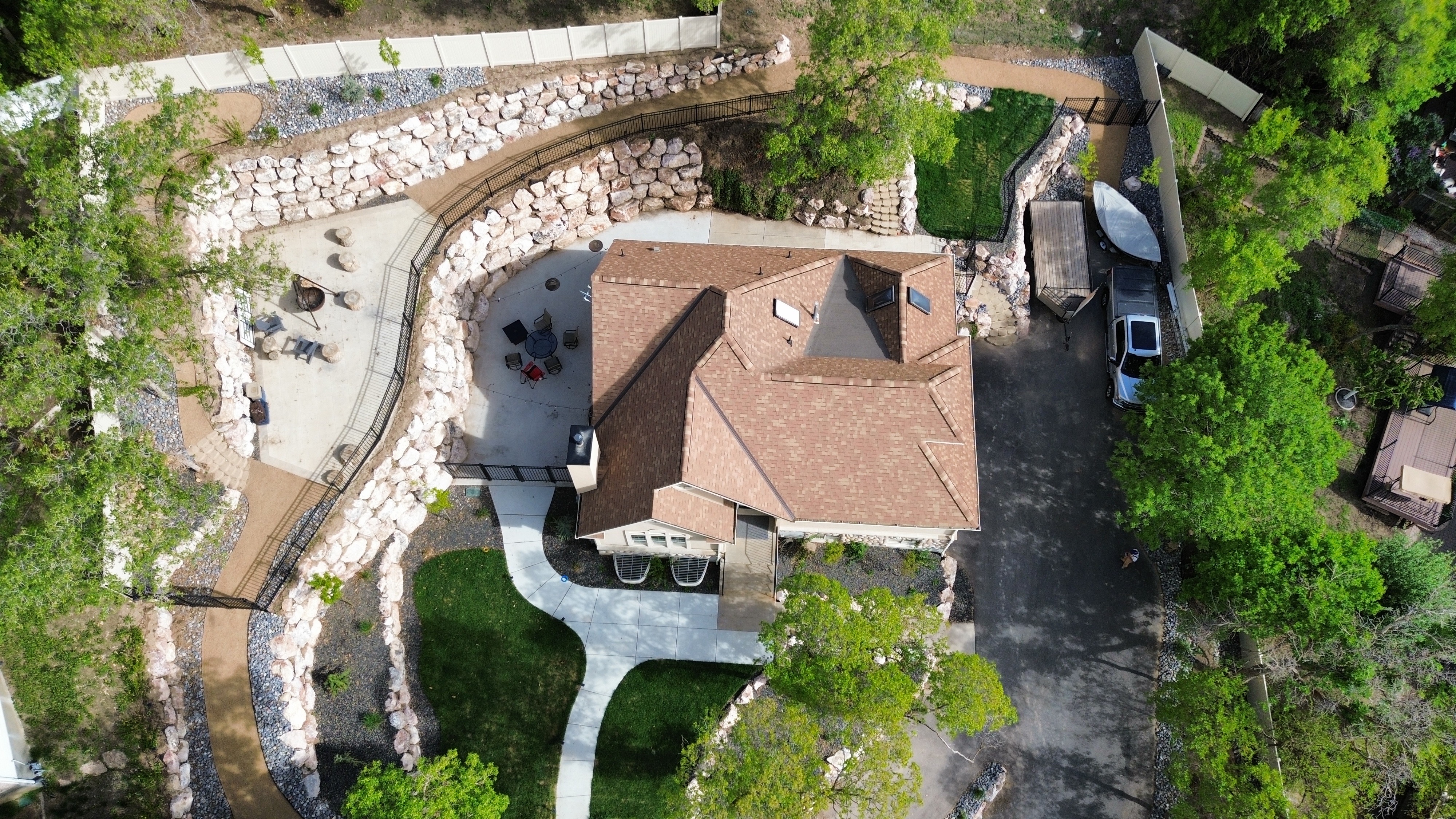
The most satisfying projects we take on are the ones that transform an entire property — not just one corner of the yard, but the full scope from curb to back fence. Seen from above, a completed estate project in a Northern Utah premier neighborhood tells the whole story: pool area, sport court, lawn panels, planting beds, mature trees positioned intentionally, landscape lighting that animates the property after dark — all designed as a single composition rather than accumulated from disconnected decisions made over different years.
Landscape lighting is consistently the highest-return single addition in that composition. A well-lit property reads as premium from the street in a way that's immediately visible to everyone who passes. The craftsman exterior that's forgettable in daylight becomes something worth stopping to look at when uplighting picks out the texture of stone and mature trees cast layered shadows that deepen the space. We design low-voltage LED landscape lighting systems as part of full landscape projects, placing fixtures where they do the most visual work: uplights on feature trees and architectural stone, pathway lights along walkways and grade transitions, downlights from pergola structures. The system we install at the outset is expandable as the landscape matures.
We come to your property with fresh eyes and specific ideas. A free site consultation costs you nothing and usually surprises clients with what's possible within their budget.
Book Your Free Design ConsultNorthern Utah soils vary from heavy clay in valley floors to thin, rocky soils on the bench. We've worked in all of them. Our soil amendment recommendations are based on what we've actually observed in your specific area — not generic instructions from a nursery tag. Getting this right is what determines whether plants establish or struggle.
We specify plants with a track record in Northern Utah's climate — not just any drought-tolerant or ornamental species from a catalog. A plant that's rated for USDA zone 5 might still fail in an Ogden Valley winter if it's not suited to our specific wind, humidity, and soil conditions. Our plant palette is built on direct local experience.
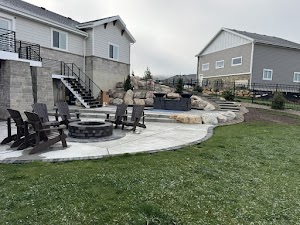
We build the patio. We build the retaining walls. And we install the landscape around them. When one team does all three, the elements are designed together rather than fitted around each other after the fact. The planting integrates with the hardscape edge. The irrigation is planned before the walkway is poured. The boulders chosen for the retaining wall inform the decorative rock in the planting beds.
Irrigation is often installed by formulaic runtimes that over-water some areas and under-water others. We design zones based on the actual plant water needs and sun exposure of each area, install pressure-regulated heads, and calibrate the system before handoff. Proper irrigation is the single biggest factor in whether your landscape establishes and thrives in Year 1.
We know when to plant in Northern Utah. Spring planting before summer heat is ideal for most species; fall planting gives roots time to establish before the ground freezes. We time installations to the conditions, not to when it's most convenient for our schedule. Planting a tree in the wrong season costs the client the tree.
Every landscape design comes with a candid discussion of what it requires to maintain. We don't design high-maintenance gardens for clients who want low-maintenance yards. We match the design to your actual lifestyle. If you want something that looks good with two hours of work per month, that's what we design. We'd rather set an expectation you can meet than sell you a vision you can't maintain.
EC Scaping designs and installs landscapes throughout Northern Utah. Our active project areas include Ogden (all neighborhoods from the valley floor to the bench), North Ogden, Pleasant View, Roy, South Ogden, Layton, Kaysville, Farmington, and Centerville. We particularly enjoy working in the hillside communities — North Ogden Bench, South Ogden East Bench, Fruit Heights — where the terrain creates natural opportunities for dramatic landscape design. These are properties where a thoughtful planting plan, set against the backdrop of the Wasatch range, creates something genuinely extraordinary.
In Ogden Valley — Eden, Huntsville, Liberty, and the surrounding mountain communities — we work on larger residential and estate properties where the landscape design needs to honor the natural setting rather than fight it. Native plants, naturalistic grading, and materials that echo the surrounding landscape are appropriate here in ways they might not be in a Layton subdivision. We adjust our approach to the setting, and we're proud of the work we've done in this exceptional part of Northern Utah. If you're in Weber or Davis County and want a landscape built right, we'd love to talk.












Landscape project costs in Northern Utah vary widely. A front yard transformation with sod, trees, shrubs, and irrigation typically runs $5,000–$15,000 depending on yard size and plant selection. A complete backyard landscape with hardscape integration starts at $15,000 and scales up. Xeriscape projects are often in the $8,000–$20,000 range for a full front yard. The variables that matter most are square footage, the number and size of plants, whether irrigation installation is included, and whether any grading or drainage work is needed. We give exact quotes after a free site visit.
Xeriscape is a landscape design approach centered on minimizing water use through drought-tolerant plant selection, efficient irrigation, and ground cover strategies. It works exceptionally well in Northern Utah because our climate is semi-arid and outdoor water costs are significant. Modern xeriscape designs are not "gravel and cactus" — they use flowering perennials, ornamental grasses, shrubs, and trees that are beautiful, attract pollinators, and require minimal maintenance once established. If you're spending more than you'd like on summer irrigation or want to reduce your landscape maintenance time, xeriscape is worth discussing.
Spring (April–June) and early fall (August–September) are the ideal windows. These periods offer moderate temperatures that reduce establishment stress and allow roots to develop before extreme heat or cold. Summer installation is possible but requires very consistent irrigation during the first 2–3 weeks. Late fall installation (after mid-October) carries risk because the sod may not have time to root before the ground freezes. We schedule sod projects to align with the best conditions for your specific situation.
Yes. We design and install complete irrigation systems as part of every landscape project. Drip systems for planting beds and trees, pop-up or rotary heads for lawn areas, backflow prevention, and smart controller programming. We also do irrigation system retrofits — if you have an existing system that's inefficient or failing, we can redesign and replace it. Proper irrigation is not optional for a Northern Utah landscape: it's the difference between plants that thrive and plants that struggle through summer.
Yes — and this is our preferred approach. When hardscape and landscape are designed and installed together, the result is significantly more cohesive. The planting plan takes the patio edges into account. The irrigation system is designed before the concrete is poured. The boulders used in planting beds complement the retaining wall material. We do full property projects regularly and the integrated approach consistently produces better results than adding landscape around pre-existing hardscape that wasn't designed with it in mind.
Not planted by default — designed. Come see what the difference looks like in person. Our consultations are free, on-site, and genuinely useful even if you don't hire us.
Tell us about your project. We'll visit your property, listen to your vision, and give you honest feedback and pricing — no obligation.