
Cut your water bill by half. Eliminate weekly mowing. Own a front yard that looks genuinely designed — not just maintained.
A bluegrass lawn in Northern Utah needs roughly one inch of water per week through the growing season. In a region that gets 15 inches of annual precipitation — most of it snow — that means running your irrigation system for months, watching the water bill climb through June, July, and August, and still watching the lawn brown out during July heat. Then comes the mowing. Then the aeration. Then the overseeding. Then fall cleanup. This is the maintenance cycle that Northern Utah homeowners have accepted as normal.
It isn't normal in any other semi-arid region. The western states that have prioritized water-conscious landscaping — Arizona, Colorado, Nevada, New Mexico — have spent decades developing xeriscape traditions that are genuinely beautiful, require a fraction of the resources, and increase rather than decrease property appeal. Northern Utah is arriving at the same point, and the results we're seeing in Ogden Valley, on the east bench in Kaysville and Farmington, and throughout Weber County are striking: landscapes that look like they belong here, because they do.
Modern xeriscape is not rocks and cactus. It is a designed landscape using ornamental grasses, flowering perennials, native shrubs, and carefully placed boulders that create year-round visual interest, attract pollinators, and require a fraction of the water and maintenance of a conventional lawn. When the design is done thoughtfully — and that's the key — it doesn't look like deprivation. It looks like intention.
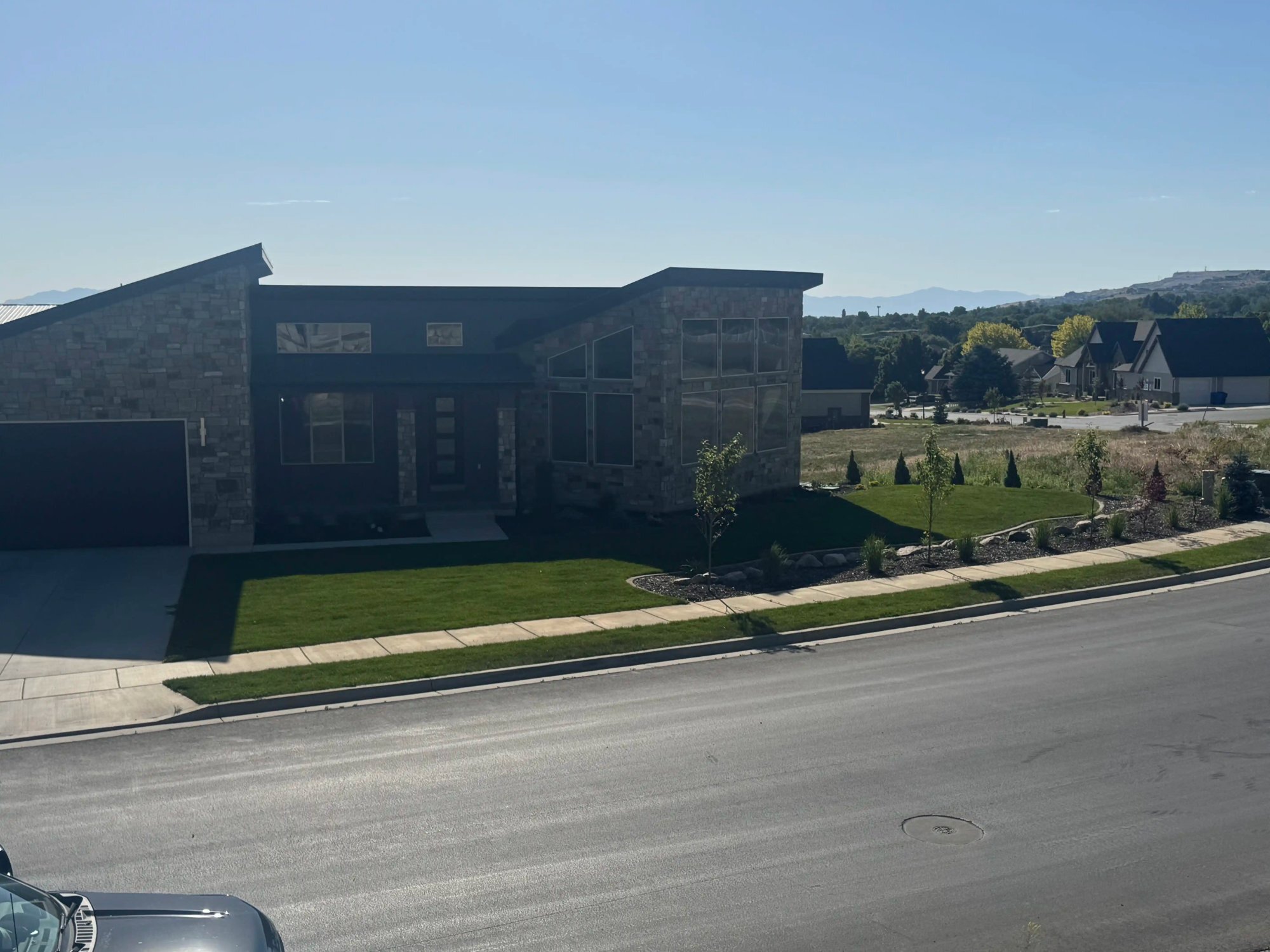
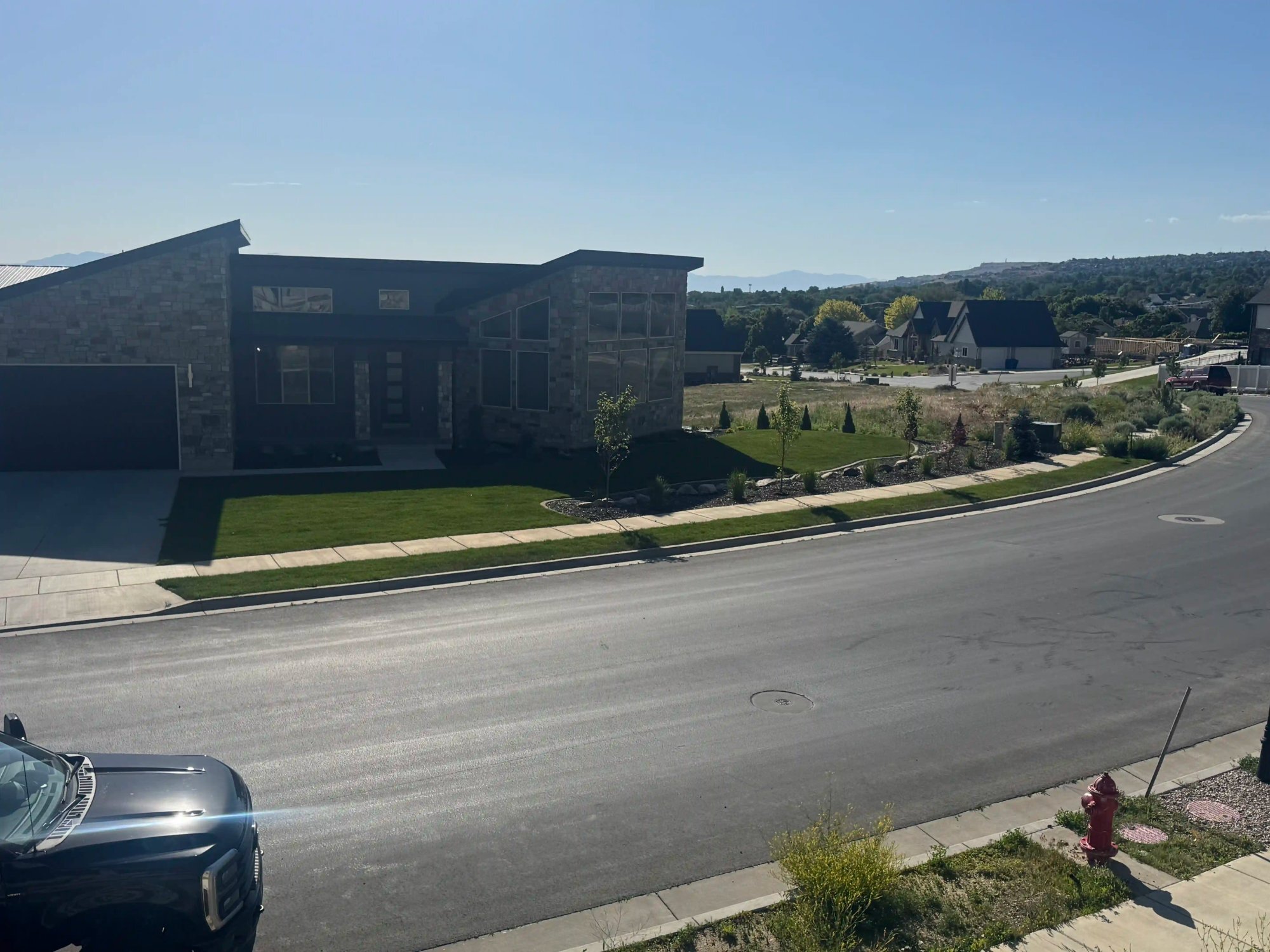
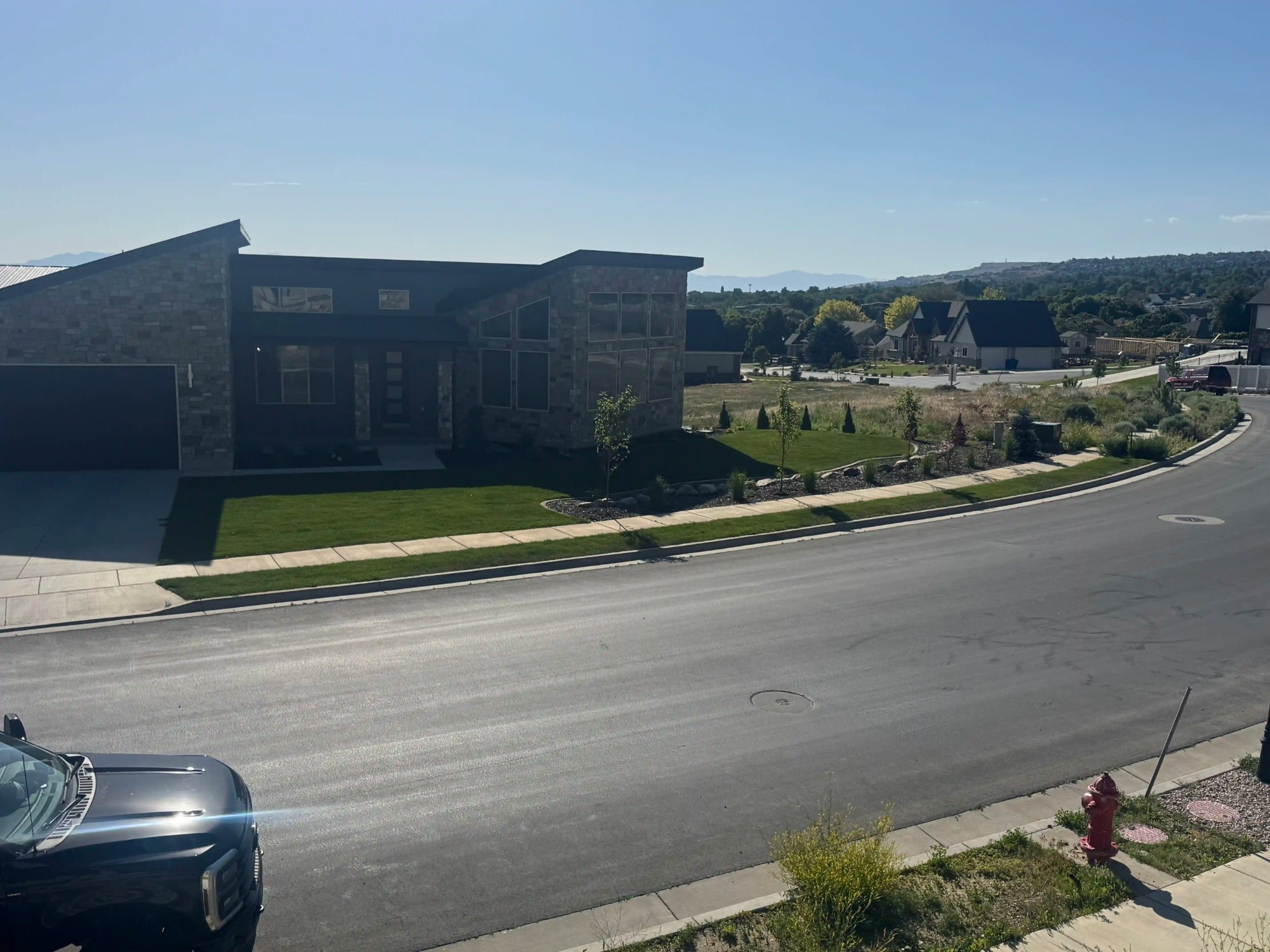
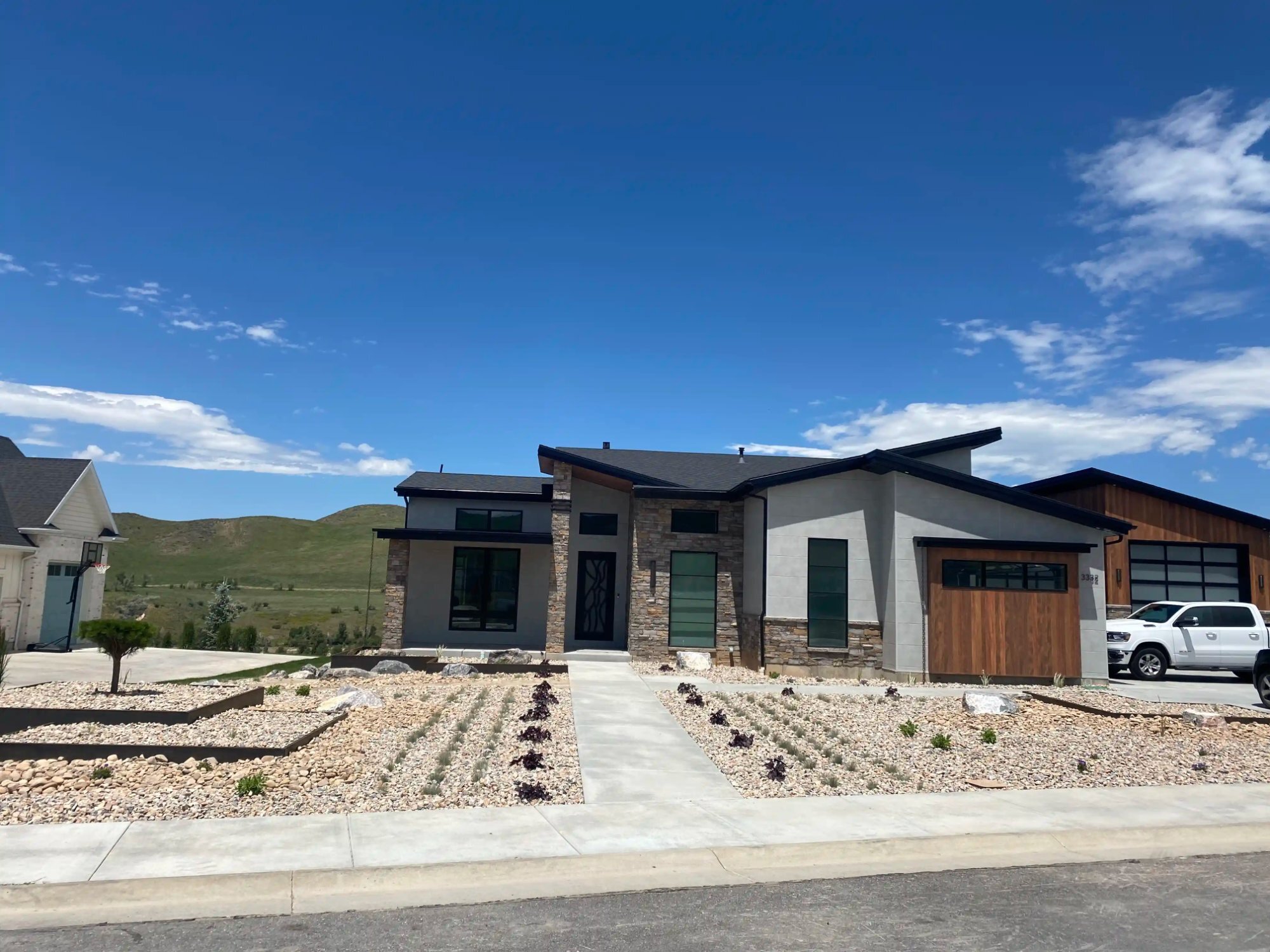
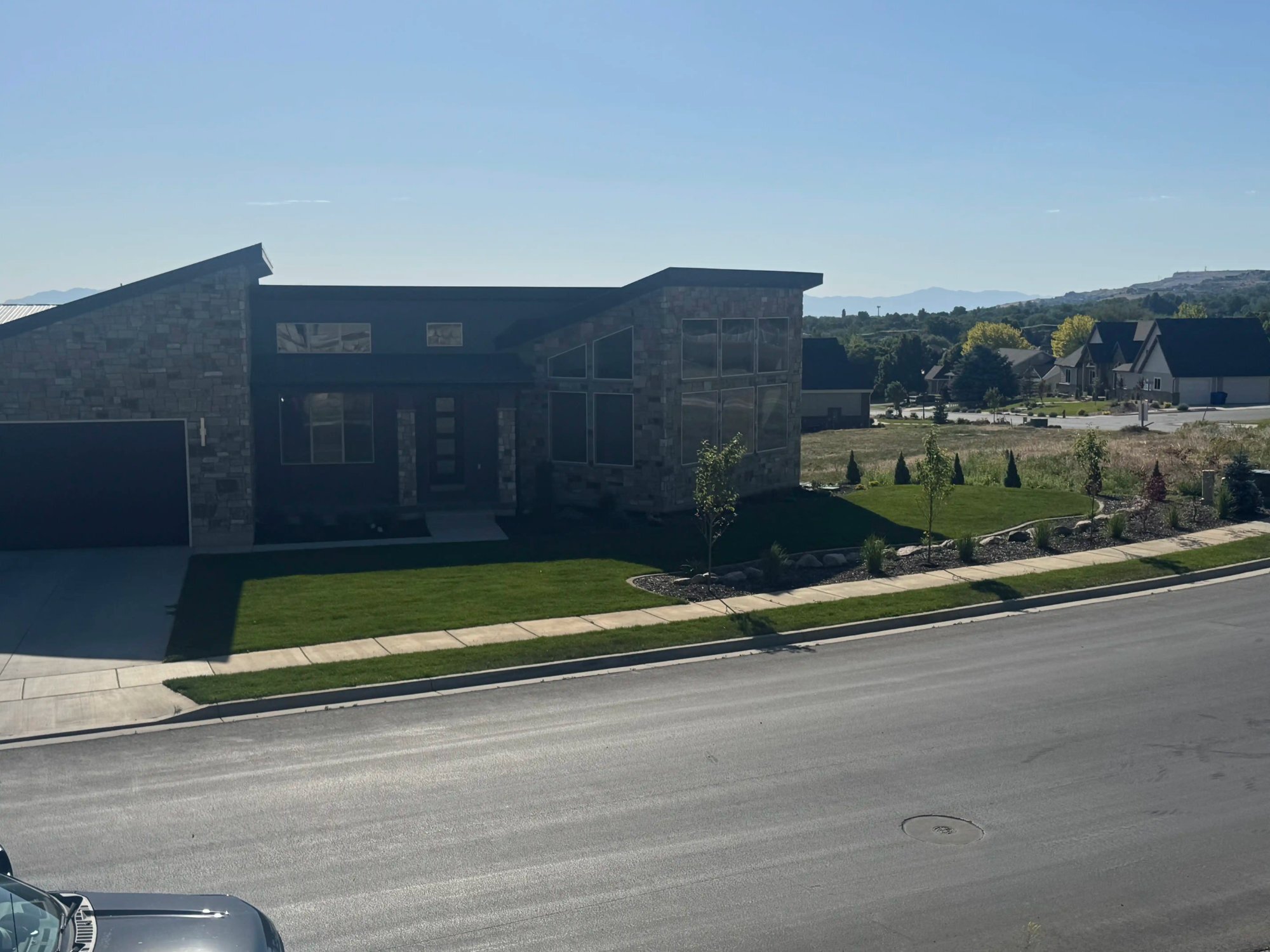
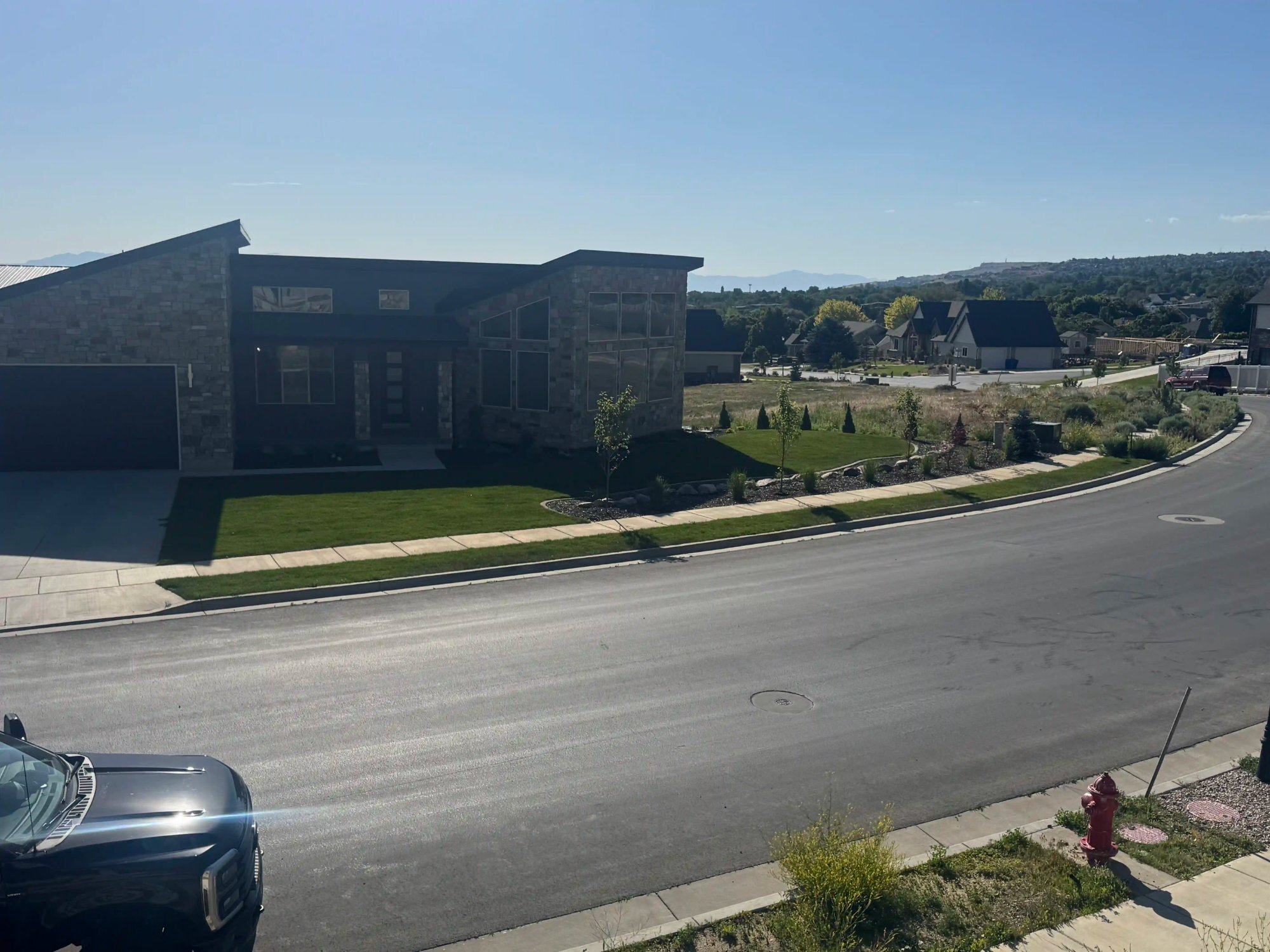
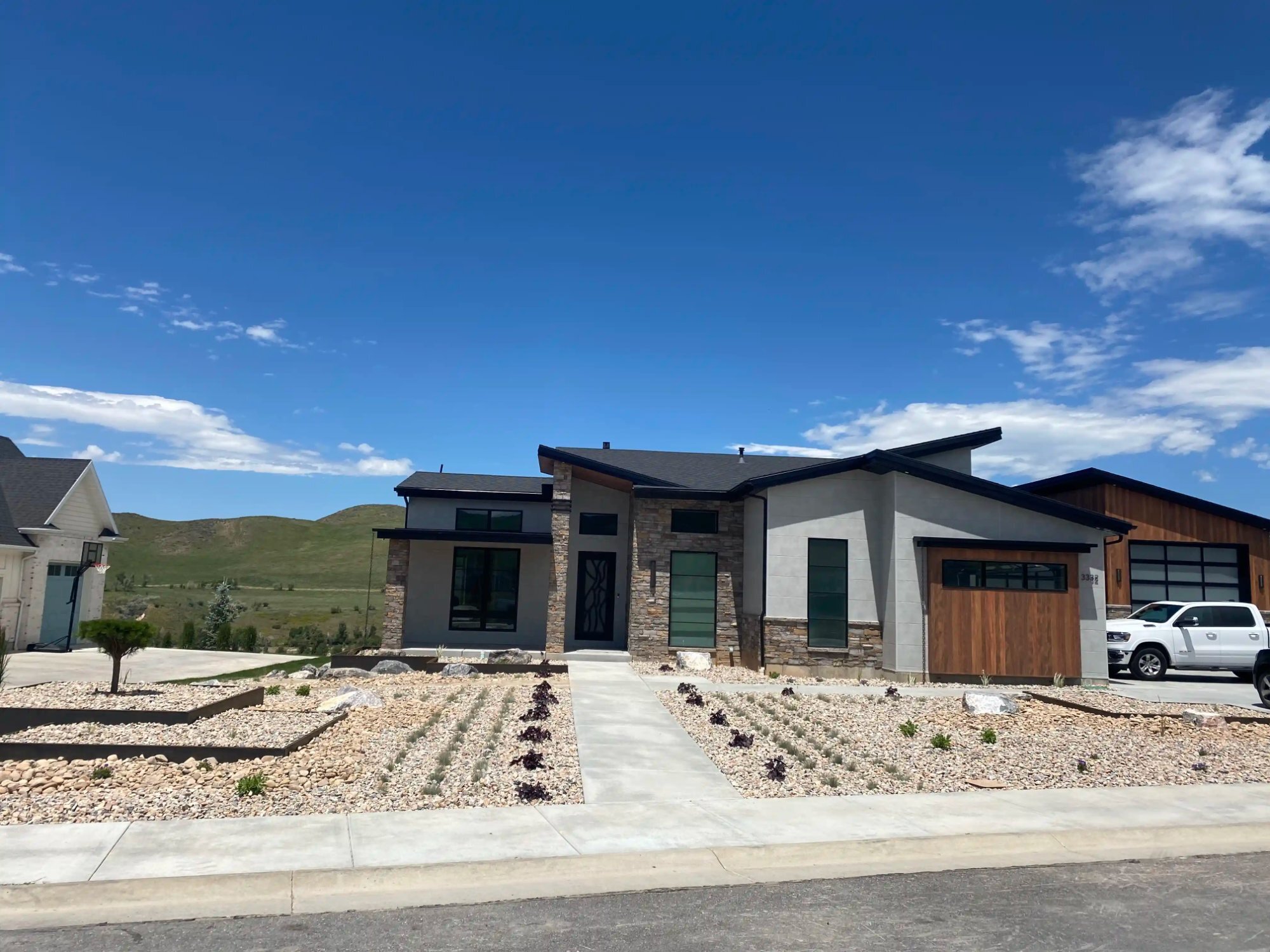
The most common xeriscape project we do is a front yard lawn replacement. The starting point is usually a homeowner who's tired of the maintenance, frustrated by the water bill, or simply wants their property to look more intentional than the standard developer-grade turf that every third house on their street also has. The result is a front yard that draws the eye — visitors slow down.
A front yard xeriscape design begins with how the space is used: is there a path from the driveway to the door? A mailbox zone? A street-facing border that needs to frame the house? We work outward from those functional anchor points and design a planting composition that has foreground, mid-ground, and background elements — shorter ornamental grasses and groundcovers in front, taller perennials and shrubs behind, evergreen structure anchoring the corners. Rock mulch or decomposed granite fills the bed; boulders provide mass and permanence where a lawn would just be flat. The drip system runs invisibly underneath.
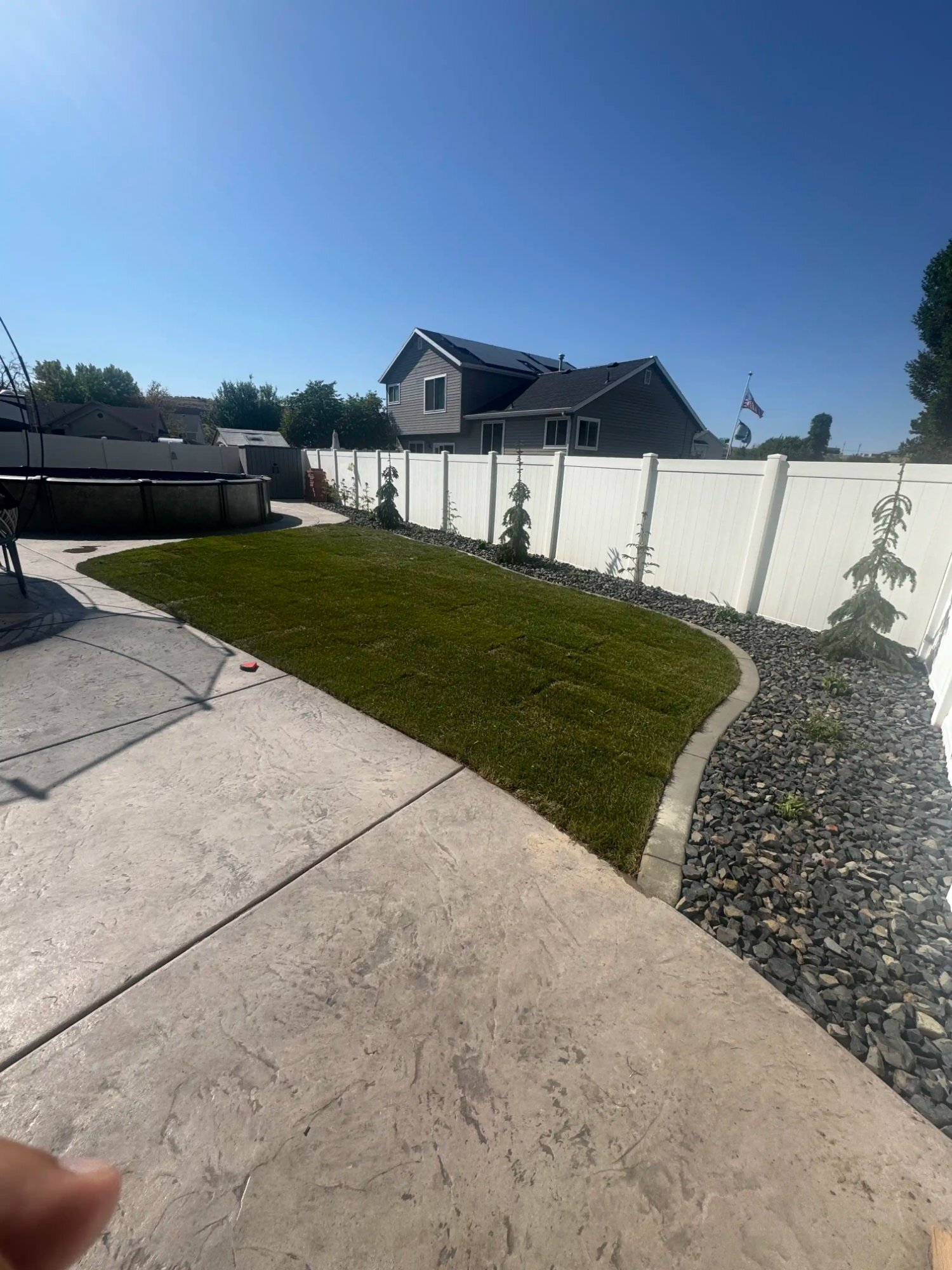
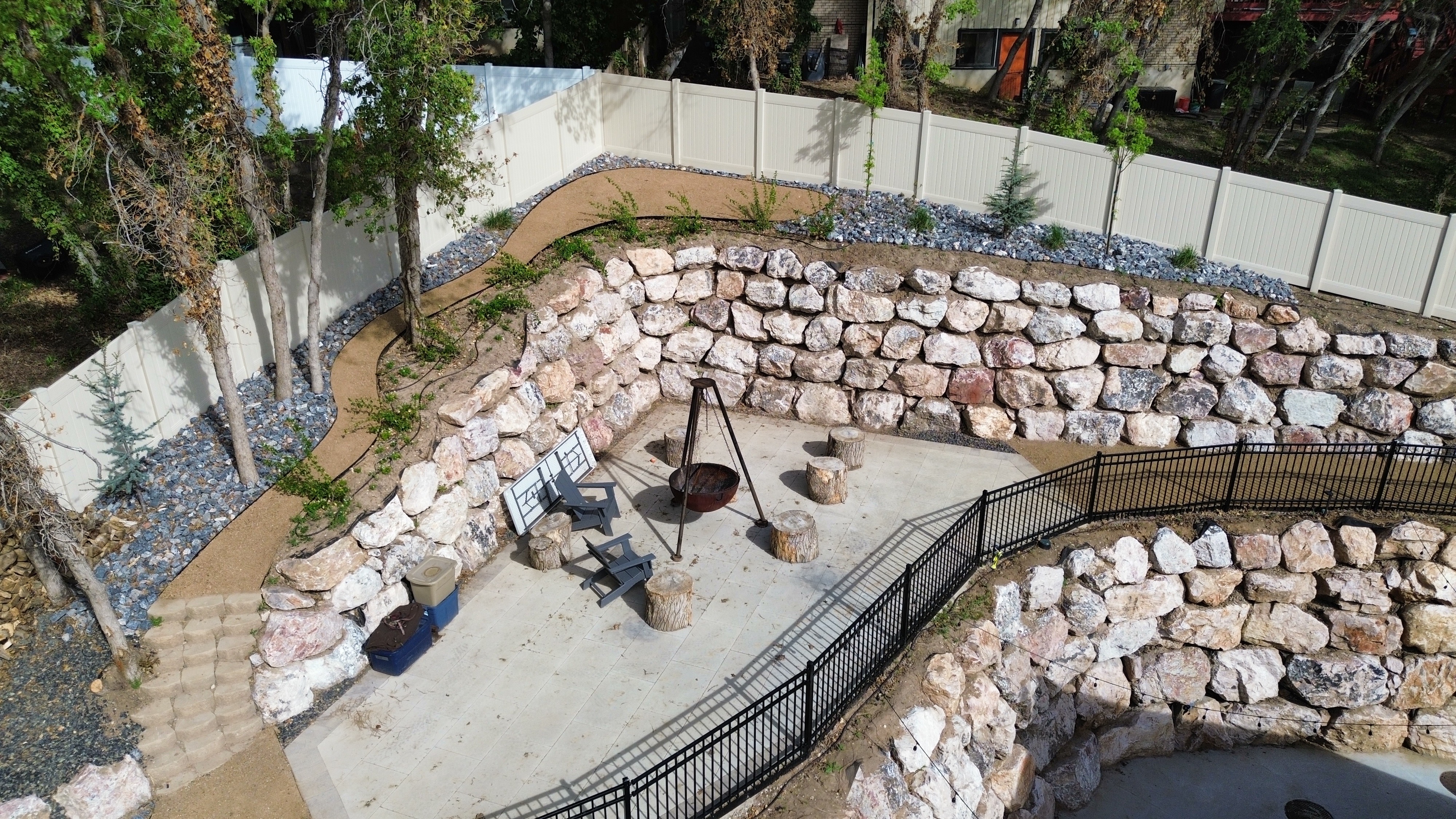
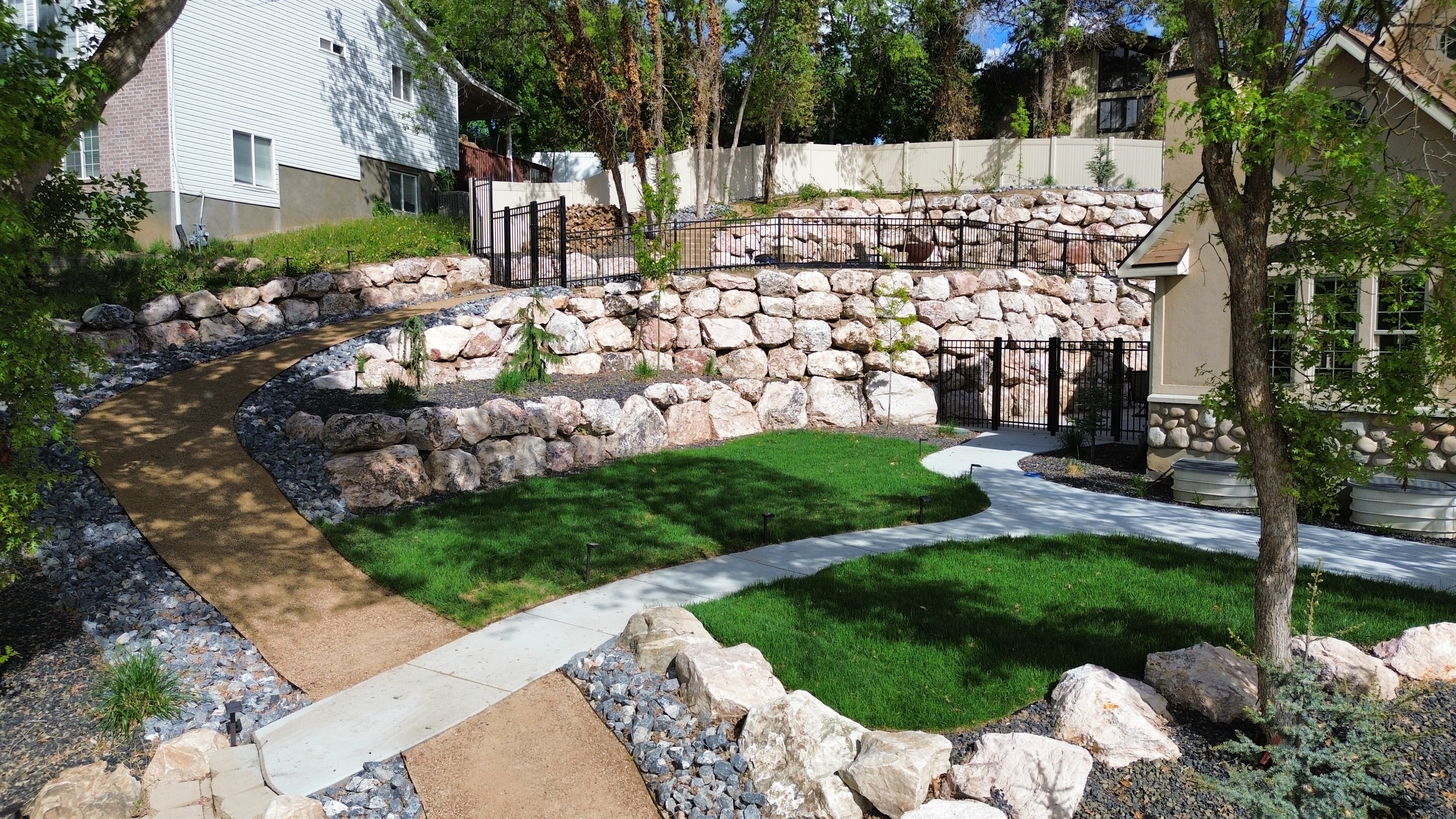
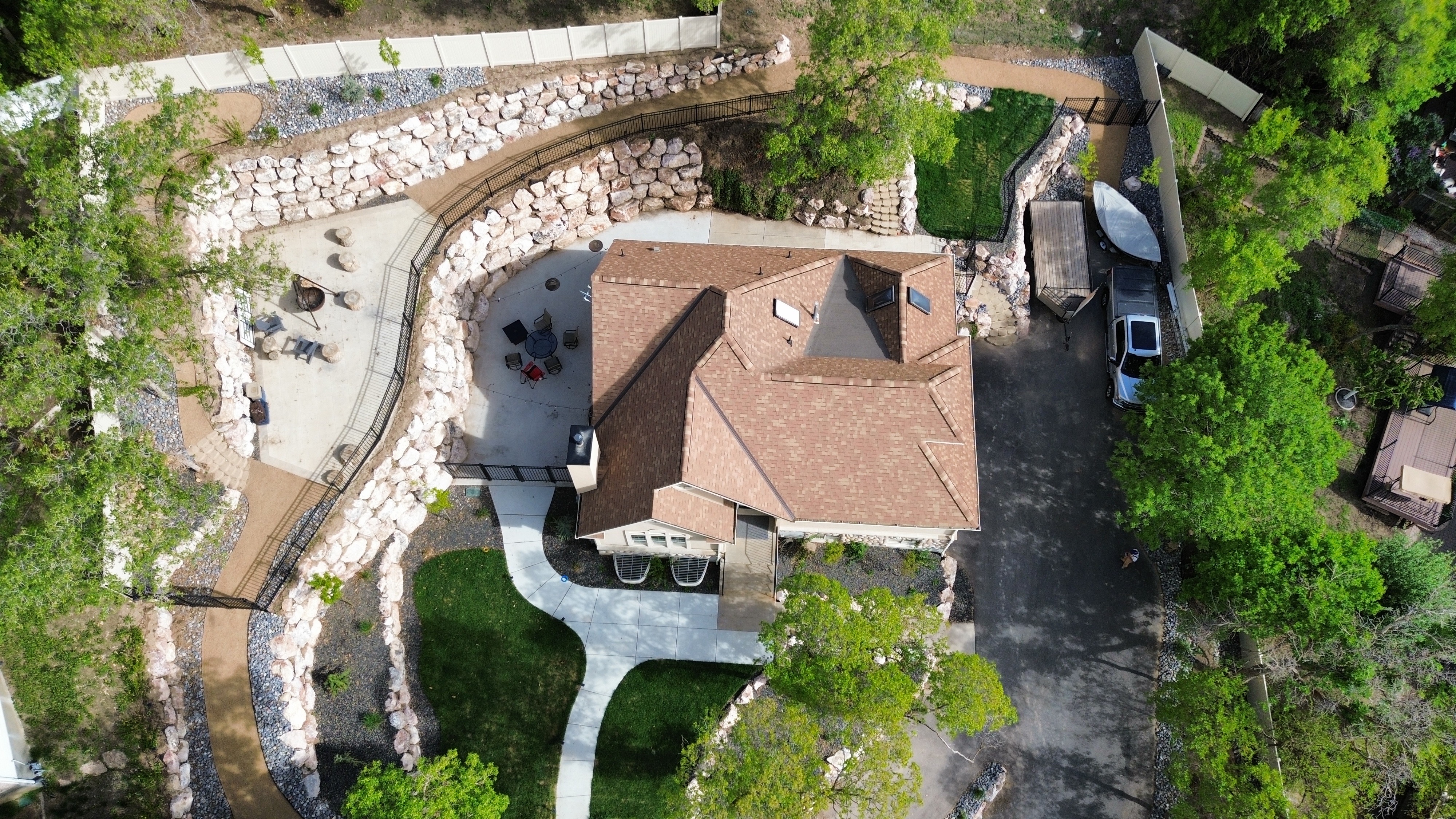
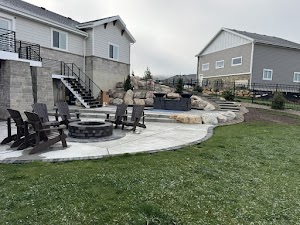
The best outdoor spaces in Northern Utah combine hardscape and landscape as a unified composition rather than two separate decisions made at different times. When a paver patio is surrounded by thoughtfully planted xeriscape beds — ornamental grasses softening the paver edges, perennials filling vertical space, boulders anchoring the transition between the hardscape and lawn — the result is a yard that looks like it was designed by someone with real vision. Because it was.
We design the planting to work with the hardscape rather than around it. That means plant heights that frame the patio rather than blocking views. Colors and textures that complement the paver material. Boulder placement that creates a sense of natural permanence without looking like rocks were just dropped in a random pattern. The drip system is stubbed out during hardscape installation so nothing gets torn up later. Every element planned together from the beginning is what separates a polished outdoor room from one that looks assembled.
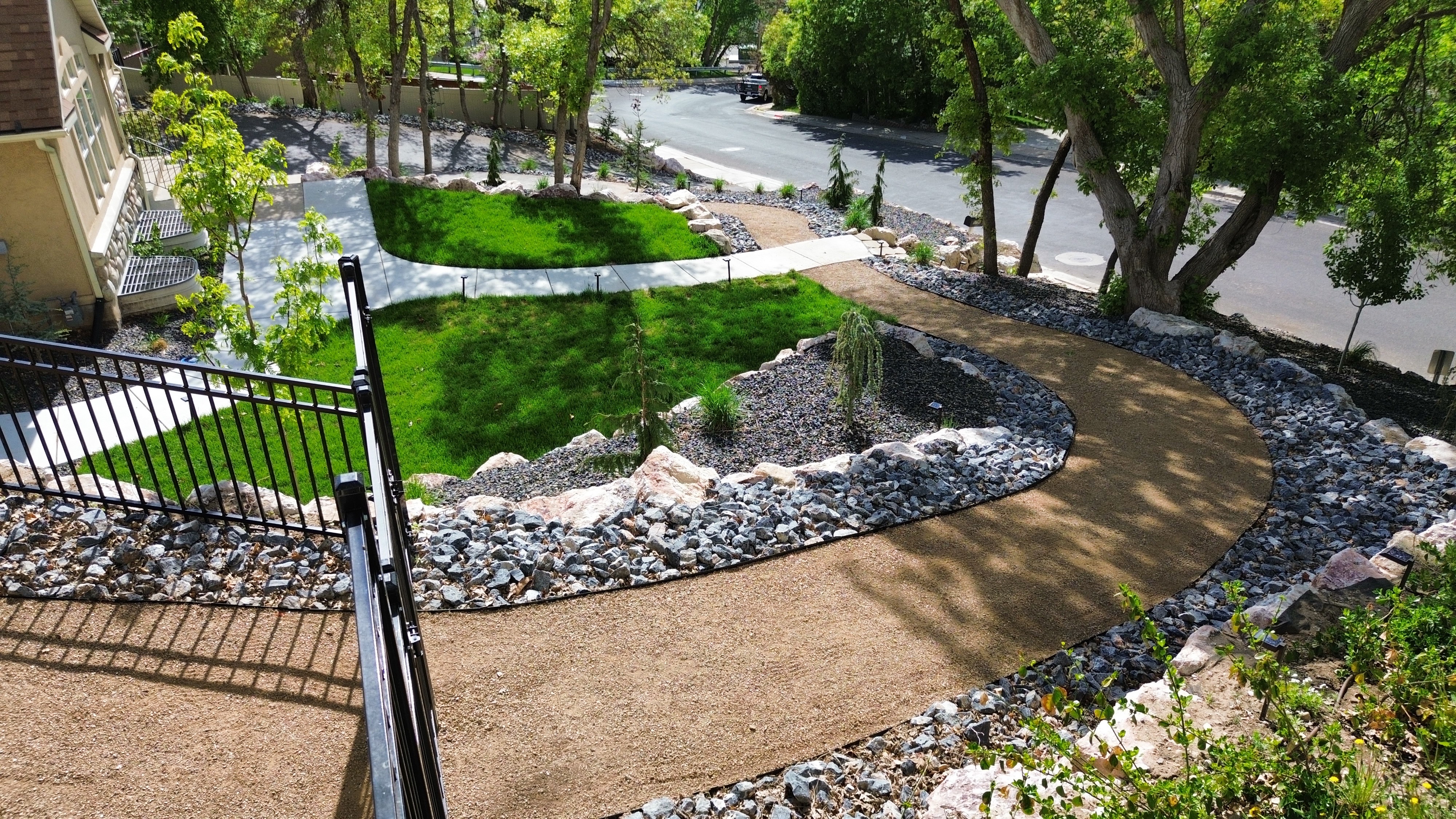
Weber Basin Water Conservancy District and several Northern Utah municipalities offer water-wise landscaping rebates for homeowners who convert turf to xeriscape. These rebates are paid per square foot of lawn removed and can meaningfully offset installation costs. The qualification criteria vary by program — typically a minimum square footage, an approved plant list, and confirmation that the old lawn was actually removed rather than just covered. We know these programs, help you document your project to qualify, and can include the rebate calculation in your consultation so you understand the actual net cost of your project before you commit.
HOA concerns are common, and legitimate — many Northern Utah HOAs have historically required lawn, or haven't addressed xeriscape in their CC&Rs. Utah state law now restricts HOAs from prohibiting water-efficient landscaping outright, but requirements around aesthetics, plant approval, and design documentation still apply. We have experience designing xeriscape projects that meet HOA aesthetic standards, preparing the visual presentations boards respond to, and helping homeowners navigate the approval process. If your HOA is the reason you haven't made this switch yet, let's talk about that specifically.
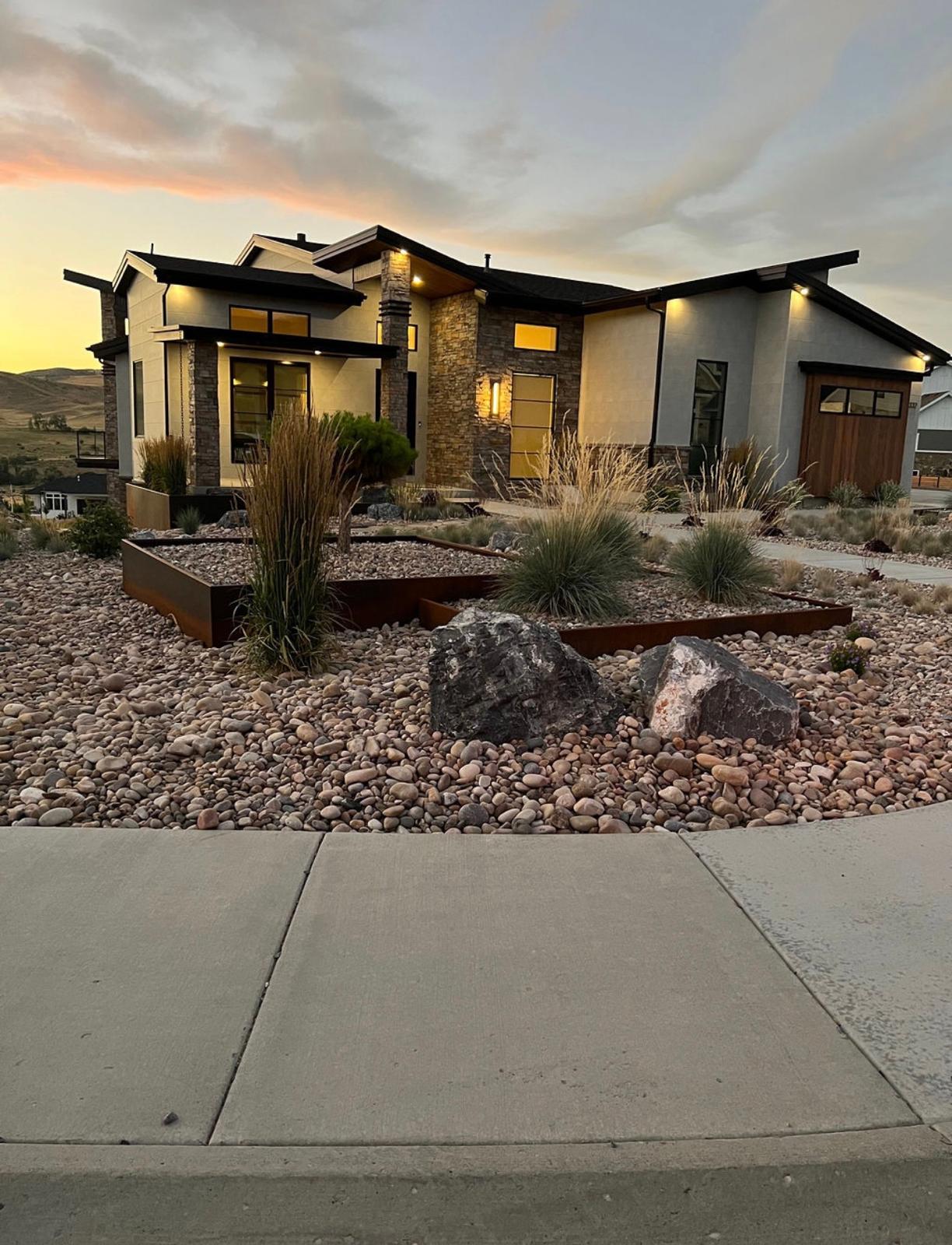
The modern xeriscape front yard has arrived in Northern Utah — and it looks nothing like the rock-and-cactus installations that gave the concept a bad reputation. Contemporary xeriscape design uses ornamental grasses that catch light and move in the wind, flowering perennials that attract pollinators from May through October, desert-adapted shrubs with four-season structure, and decorative rock that complements rather than replaces the planting. At dusk, when the day's heat breaks and the sky over the Wasatch shifts through gold into blue, a properly designed xeriscape front yard is genuinely beautiful. This is a landscape that rewards you morning and evening, in every season.
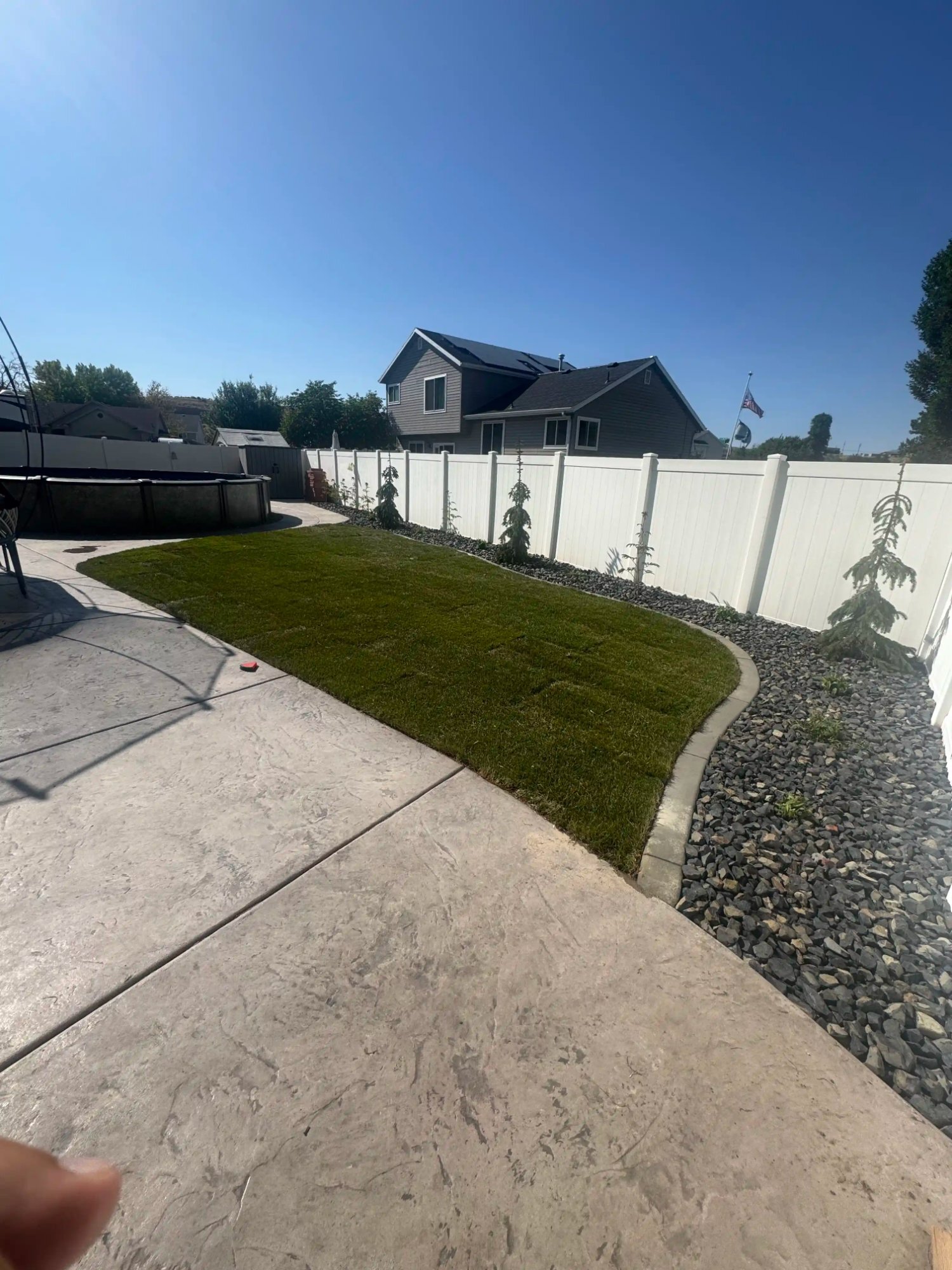
The practical case is equally compelling. A Northern Utah home with a full bluegrass front lawn can use 60–80% of its total summer water consumption keeping that lawn alive from June through August. Replace that lawn with a well-designed xeriscape — mulched planting beds, drought-tolerant groundcovers, drip-irrigated shrubs and trees — and that consumption drops by 50–75%. Weber County's water conservation rebate programs recognize this benefit and offer financial incentives for turf conversion that can partially offset your installation cost. We help clients calculate their specific water savings estimate and navigate rebate applications as part of the consultation process.
We'll walk your property with you, calculate your current irrigation square footage, and show you exactly what a xeriscape conversion would look like and what it would save.
Schedule Free On-Site ConsultationWe don't pull from a generic drought-tolerant plant list. We specify plants we know perform in Northern Utah's soil types, at our elevation, and through our freeze-thaw winters. Plants that look great in a Phoenix catalog often struggle here. We plant what we know will thrive.
Every xeriscape we install includes a properly designed drip system. Not just emitters thrown at plants — a system sized for your water pressure, zoned by plant water needs, and easy for you to manage. Proper irrigation during the establishment period determines whether your investment thrives or struggles.
Northern Utah soils are often high-pH clay or sandy fill from past construction. Most drought-tolerant plants need well-draining soil with appropriate organic content. We test and amend before planting rather than wondering why plants fail to establish. It's an upfront cost that pays for itself in plant survival.
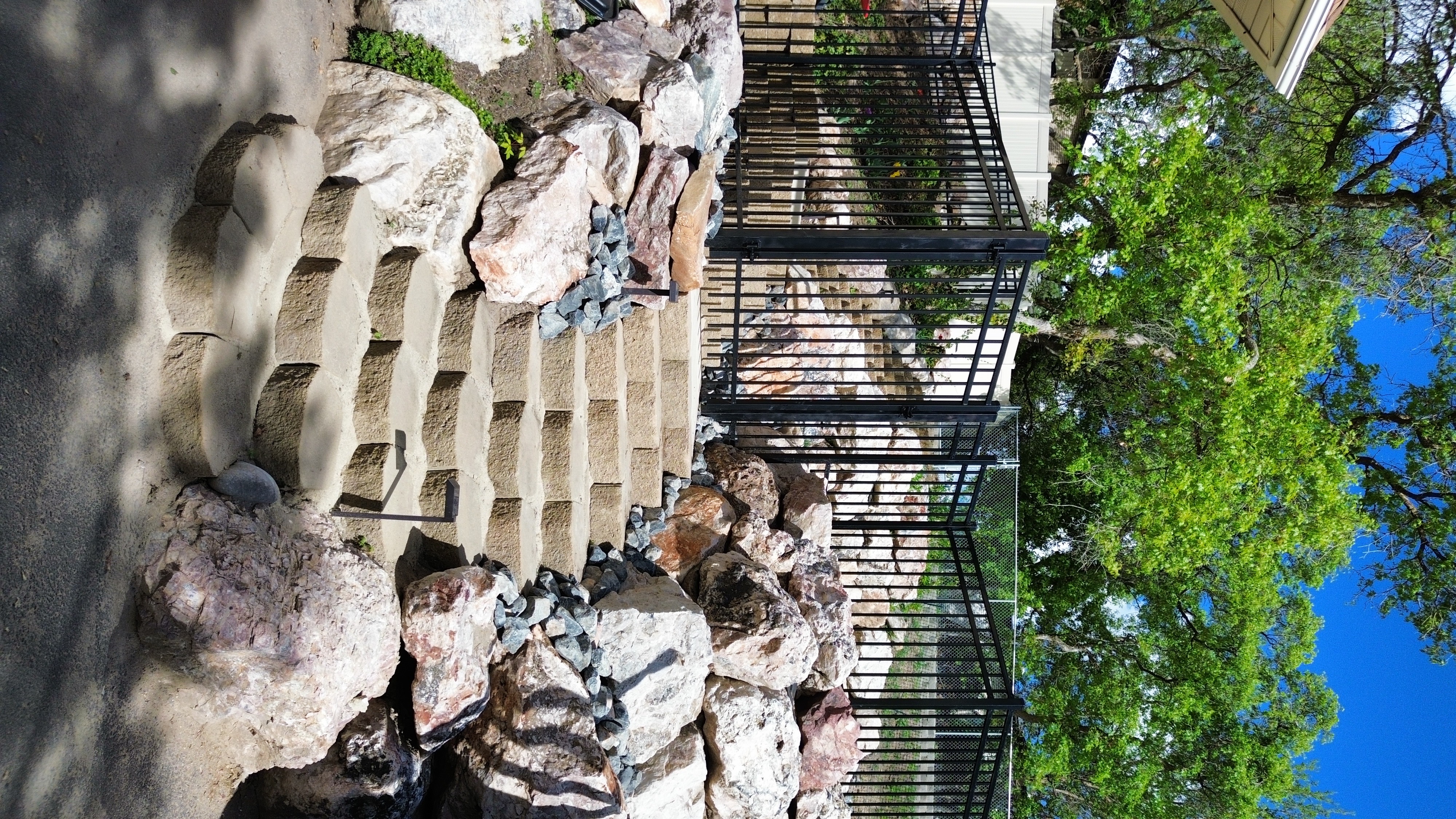
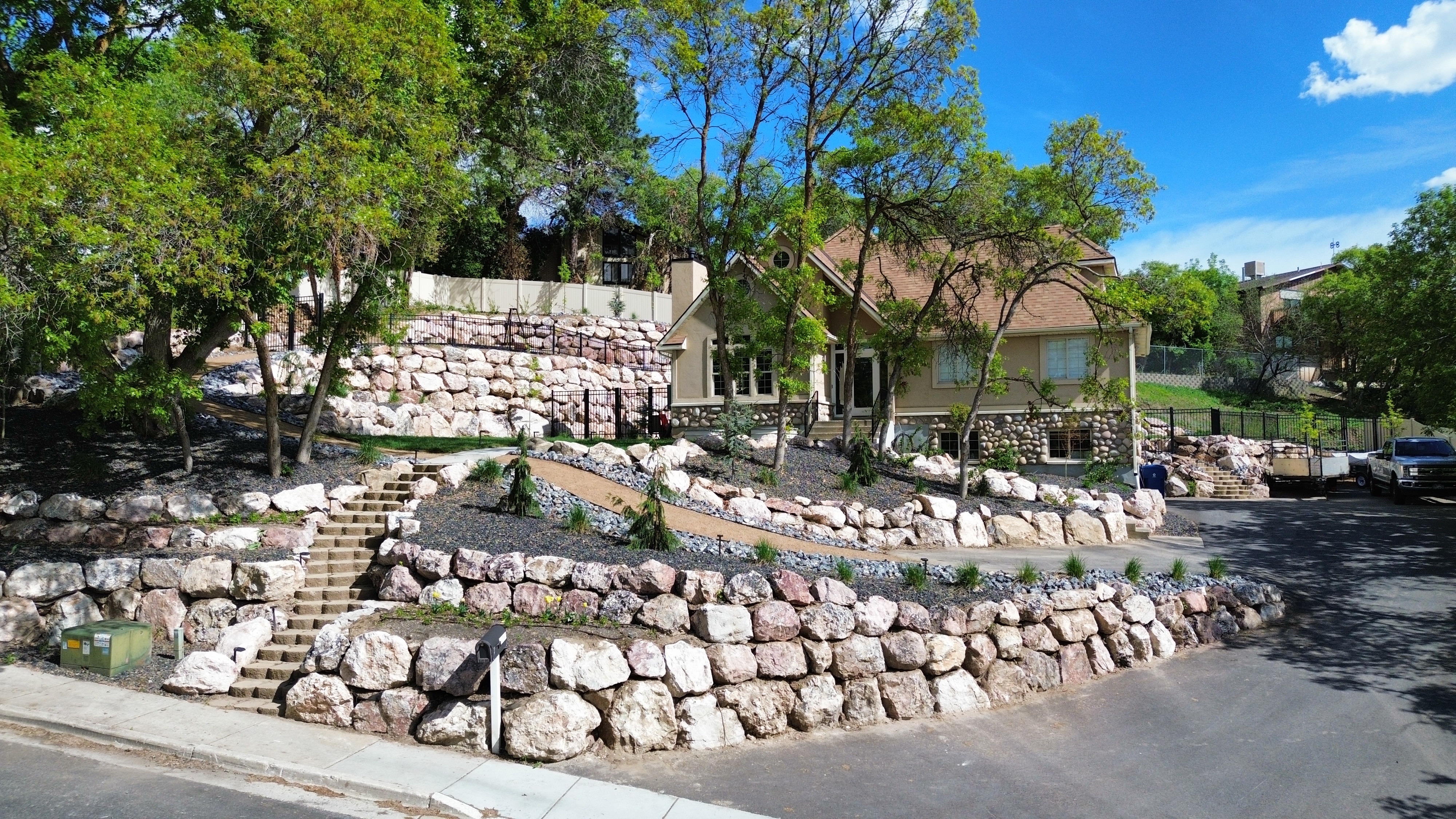
Boulders in a xeriscape aren't decorations — they're structural design elements that provide mass, create microclimates for plants, and give the landscape permanence. We source and place boulders as part of the design process, not as an afterthought. The difference between a boulder that looks placed and one that looks dropped is significant.
A xeriscape that only looks good in summer is a design failure. We plan for four seasons: spring bulbs, summer perennial bloom, fall seed heads and grasses, and winter structural interest from ornamental grasses, evergreen shrubs, and rock features. Your landscape should look considered in February, not abandoned.
We've helped many Northern Utah homeowners navigate HOA approval processes and Weber Basin rebate applications. We provide the documentation, plant palette lists, and design presentations that boards require, and we know which rebate programs apply to your municipality and how to qualify for them.
These are species we've tested in Weber, Davis, and Morgan County soils and climates — not catalog recommendations.
EC Scaping installs xeriscape projects throughout the Northern Utah corridor. We work in Ogden, North Ogden, South Ogden, Harrisville, and Pleasant View in Weber County; Layton, Kaysville, Farmington, Centerville, and Bountiful in Davis County; and throughout Morgan County. We also serve Eden and the Ogden Valley, where mountain properties benefit particularly from xeriscape design that works with the high desert environment rather than against it.
If your address is in Weber Basin Water Conservancy District's service area, you may be eligible for their water-wise landscaping rebate — most Northern Utah homeowners are. We'll confirm eligibility and help you with the documentation as part of your project.










Xeriscape is a landscape design approach that minimizes water use through drought-tolerant and native plant selection, efficient drip irrigation, and strategic ground cover — rock mulch, decomposed granite, or flagstone — to suppress weeds and retain soil moisture. It is exceptionally well-suited to Northern Utah because the region is semi-arid, our outdoor water costs are significant, and our soils and growing conditions favor many beautiful plants that don't need regular irrigation once established. Modern Utah xeriscape uses flowering ornamental grasses, lavender, native sages, serviceberry, rudbeckia, echinacea, and dozens of other plants that are colorful, pollinator-friendly, and attractive year-round. This is not rocks and cactus.
A well-designed xeriscape typically reduces outdoor water use by 50–75% compared to a traditional bluegrass lawn. In Northern Utah, where outdoor irrigation can account for 60–70% of total summer water consumption, this represents a meaningful reduction in utility costs. Exact savings depend on your current lawn size, irrigation system efficiency, and plant selection. During your consultation we calculate your approximate current irrigation footprint and estimate what it would drop to with xeriscape. Weber Basin Water Conservancy District also offers rebates for turf conversion — typically paid per square foot — that can partially offset your installation investment.
No — a well-designed xeriscape has visual interest in all four seasons. Winter structure comes from ornamental grasses (which hold their form beautifully through frost and snow), evergreen shrubs, dwarf conifers, and boulder placement. Seed heads on native grasses and perennials are visually striking through winter and provide wildlife habitat. Spring brings early bulbs and emerging grasses; summer is full bloom; fall gives you seed heads, color change in ornamental grasses, and shrub berries. If your xeriscape looks dead in winter, it was designed by someone who only thought about summer. We plan for twelve months.
Increasingly, yes — and Utah state law now restricts HOAs from prohibiting water-efficient landscaping outright. However, specific requirements around aesthetics, approved plant lists, coverage percentages, and documentation still vary by HOA. We have experience designing xeriscape projects that meet HOA aesthetic standards and preparing the visual presentations that boards respond to. If your HOA is the main reason you haven't moved forward with xeriscape, bring that concern to your consultation — we've navigated the approval process for many Northern Utah homeowners and can discuss what your specific HOA is likely to require.
We select plants based on your specific site conditions — soil type, drainage, aspect (sun vs. shade), elevation, and your aesthetic preferences. Common selections include ornamental grasses (Karl Foerster, Blue Oat Grass, Little Bluestem), flowering perennials (lavender, catmint, rudbeckia, echinacea, salvia, penstemon, yarrow), native and adapted shrubs (serviceberry, Apache Plume, rabbitbrush, potentilla), and structural elements like dwarf mugo pine and ornamental trees. We avoid plants that look good in national catalogs but struggle in Utah soils and our frost zone. Everything we specify, we've planted and watched perform here.
Yes — drip irrigation is standard on every xeriscape installation. Drip delivers water directly to plant root zones, eliminating the evaporation and runoff waste of overhead spray systems. During the establishment period (the first 1–2 growing seasons), your plants need regular irrigation to develop deep root systems; after establishment, most xeriscape plantings in Northern Utah need supplemental irrigation only during extended dry periods. We design your drip system for the establishment phase and give you a written watering schedule and a clear description of how to reduce irrigation once plants are established.
Most xeriscape plants reach full establishment in 1–2 growing seasons when properly planted and irrigated through establishment. Ornamental grasses and perennials establish faster than shrubs and trees. During the first season, you water regularly but on a declining schedule as plants develop root depth. By the second or third season, most plantings require little to no supplemental irrigation outside of extended droughts. We give you a written first-season watering schedule specific to your plant palette and drip system, so you're not guessing.
A full xeriscape installation — lawn removal, soil amendment, planting, rock mulch, and drip irrigation — typically runs $8–$18 per square foot depending on design complexity, boulder work, and plant density. This is comparable to or slightly higher than a quality sod installation. The economics reverse over time: no reseeding, no aeration, no fertilizer program, no weekly mowing costs, and 50–75% reduced irrigation expenses. Most clients recover the cost premium within 3–5 years through water and maintenance savings. Available water rebates can reduce the net installation cost significantly — we calculate this as part of your consultation so you know the real numbers before you decide.
One free on-site consultation. We walk your property, calculate your current irrigation footprint, identify applicable rebates, and design a xeriscape plan that fits how your property is actually used.